

5 Best Longevity Supplements for Beginners 2026
Table of Contents
- What Are Longevity Supplements and Why Beginners Should Consider Them
- NMN Benefits for Cellular Health and Energy Production
- How to Choose High-Quality Longevity Supplements That Actually Work
- The 5 Best Longevity Supplements for Beginners
- Longevity Supplement Safety, Side Effects, and Dosage Guidelines
- When to Start Taking Longevity Supplements and What to Expect
- Common Mistakes Beginners Make With Longevity Supplements
- Frequently Asked Questions
Last Updated: September 25, 2026
What Are Longevity Supplements and Why Beginners Should Consider Them
Longevity supplements are compounds designed to support cellular health, slow age-related decline, and extend healthspan, the number of years you live in good health. Unlike general multivitamins, longevity supplements for beginners focus on specific pathways that drive aging: mitochondrial function, cellular senescence, oxidative stress, and systemic inflammation.
By your mid-40s, NAD+ levels drop roughly 50% compared to your 20s, mitochondria become less efficient, and inflammation markers rise, measurable changes that affect energy and performance.
Most beginners waste money on trendy compounds. Real wins come from addressing baseline nutrition gaps first, then layering in targeted anti-aging compounds with clinical support.
This guide covers five longevity supplements for beginners that deliver measurable results, how to choose high-quality options, side effects to watch for, and when to expect improvements in energy and mental clarity.
NMN Benefits for Cellular Health and Energy Production
NMN (Nicotinamide Mononucleotide) is a precursor to NAD+, a coenzyme powering cellular energy metabolism and DNA repair. NMN supplements replenish NAD+ production, activating sirtuin proteins responsible for cellular repair and longevity pathways.
Higher NAD+ levels mean better mitochondrial energy production. People report less afternoon fatigue and sharper mental focus, NAD+ directly fuels ATP production your cells depend on.
NMN bioavailability matters significantly. Advanced delivery technology optimizes absorption so more compound reaches your bloodstream and target tissues, quality matters more than quantity.
How to Choose High-Quality Longevity Supplements That Actually Work
Choose supplements with third-party testing by independent labs verifying purity, potency, and absence of contaminants. This eliminates roughly 40% of products containing less active ingredient than labeled or undisclosed fillers.
Check for enhanced delivery mechanisms, liposomal encapsulation, micronization, or proprietary absorption technology, that increase the amount reaching your cells.
Reputable manufacturers list exact dosages and sourcing. Avoid proprietary blends or vague language, you need to know exactly what you're taking and in what amounts.
Calculate cost-per-dose. A supplement costing twice as much but delivering three times the bioavailable dose is cheaper per unit of benefit. Compare value, not price.
| Quality Factor | What to Look For | Red Flag |
|---|---|---|
| Testing | Third-party verification by independent lab | No testing or "proprietary formula" |
| Bioavailability | Enhanced delivery technology mentioned | Standard powder with no absorption optimization |
| Dosage | Specific amounts listed per ingredient | Vague or "proprietary blend" |
| Purity | GMP-certified manufacturing facility | No manufacturing standard mentioned |
| Sourcing | Specific origin or supply chain detail | Generic "natural source" |
The 5 Best Longevity Supplements for Beginners
1. NMN (Nicotinamide Mononucleotide)
NMN addresses declining NAD+ levels, one of the most measurable drivers of aging. By mid-40s, NAD+ production drops significantly, correlating with fatigue, cognitive decline, and reduced cellular repair capacity.
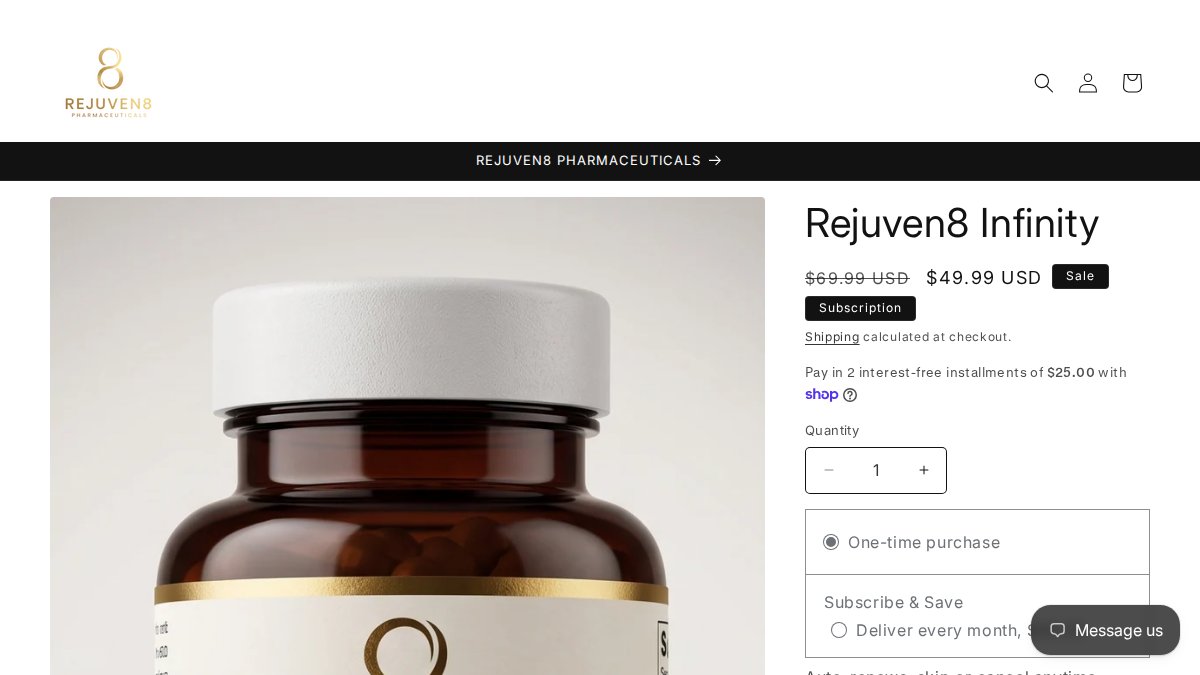
Rejuven8 Infinity combines high-purity NMN with enhanced bioavailability to optimize absorption, supporting NAD+ production, cellular energy metabolism, and mental clarity.
Typical dosage ranges from 250-500mg daily. Most users report improved afternoon energy within 2-3 weeks of consistent use.
Pros: Directly targets NAD+ decline; third-party tested; addresses mitochondrial function; supports cognitive performance; backed by clinical research on NAD+ pathways.
Cons: Results take 2-3 weeks to manifest; requires consistent daily use; not suitable if you take certain blood pressure medications.
2. Vitamin D3
Vitamin D3 is a non-negotiable baseline nutrient. Most people, especially those working indoors, fall short of optimal levels. Low vitamin D correlates with increased inflammation, reduced cognitive function, and accelerated cellular aging.
Vitamin D3 regulates calcium absorption, supports immune function, and reduces systemic inflammation. Most beginners see improvements in mood, energy, and sleep within 4-6 weeks of reaching adequate levels.
Dosage typically ranges from 2,000-4,000 IU daily for maintenance, with some individuals needing 5,000-10,000 IU depending on baseline levels and sun exposure. Getting a serum 25-hydroxyvitamin D test before starting tells you exactly where you stand and prevents over-supplementing.
Pros: Inexpensive; well-researched; addresses widespread deficiency; reduces inflammation; supports bone health; improves mood and cognitive function.
Cons: Takes 4-6 weeks to show results; excessive supplementation can cause toxicity; requires baseline testing for personalization.
3. Omega-3 Fatty Acids
Omega-3 fatty acids reduce systemic inflammation, support cardiovascular health, and protect cognitive function. Low omega-3 intake correlates with cognitive decline, depression, and accelerated aging markers.
Most Western diets are deficient in omega-3s relative to omega-6s. Supplementing rebalances this ratio and reduces inflammation. Cognitive benefits include improved focus, reduced brain fog, and better memory consolidation.
Dosage typically ranges from 1,000-2,000mg combined EPA/DHA daily. Quality matters significantly because omega-3s oxidize easily, so look for products in dark bottles with freshness guarantees. Enteric-coated formulations reduce the fishy aftertaste many people experience.
Pros: Reduces systemic inflammation; supports cardiovascular and cognitive health; addresses widespread dietary deficiency; well-researched; relatively inexpensive.
Cons: Can cause mild blood thinning; fishy aftertaste common; requires consistent daily use; oxidizes if stored improperly.
4. CoQ10
CoQ10 is a critical cofactor in mitochondrial energy production. CoQ10 levels decline with age, particularly after 40, impairing mitochondrial efficiency and contributing to fatigue.
CoQ10 functions as a powerful antioxidant protecting cells from oxidative stress and supporting cardiovascular health. People taking statins should supplement with CoQ10 because statins deplete natural stores, accelerating mitochondrial dysfunction.
Ubiquinol is the active form with superior bioavailability. Dosage typically ranges from 100-300mg daily, with 200mg a solid starting point. Results usually appear within 3-4 weeks.
Pros: Supports mitochondrial energy production; powerful antioxidant; addresses age-related decline; particularly important if taking statins; supports cardiovascular health.
Cons: Expensive relative to other supplements; requires fat intake for absorption; takes 3-4 weeks to show results; fat-soluble so can accumulate if over-supplemented.
5. Resveratrol
Resveratrol is a polyphenol that activates sirtuin proteins, the same longevity pathways targeted by calorie restriction and exercise. It reduces inflammation, supports cardiovascular health, and promotes cellular repair through multiple anti-aging pathways. Integrating these molecular interventions into a broader framework requires consistent longevity lifestyle steps that harmonize daily habits with the biological processes of cellular maintenance.
Resveratrol activates sirtuins regulating cellular senescence, mitochondrial function, and DNA repair. People report improved energy, better exercise recovery, reduced joint inflammation, and improved focus.
Dosage typically ranges from 150-500mg daily. Look for enhanced delivery or trans-resveratrol formulations for better bioavailability. Results usually appear within 2-3 weeks.
Pros: Activates longevity pathways; reduces inflammation; supports cardiovascular health; improves exercise recovery; addresses multiple aging mechanisms.
Cons: Bioavailability challenges with standard formulations; can interact with blood thinners; relatively expensive; requires consistent daily use for maximum benefit.
Longevity Supplement Safety, Side Effects, and Dosage Guidelines
Most longevity supplements for beginners are well-tolerated at recommended dosages. NMN occasionally causes mild headaches or nausea in the first week. Vitamin D3 is safe at 4,000 IU daily but can cause toxicity above 10,000 IU sustained over months. Omega-3s thin blood mildly, requiring caution if you take anticoagulants.
CoQ10 is fat-soluble, meaning your body stores it rather than excreting excess amounts. This makes toxicity theoretically possible at very high doses, but practical toxicity is rare at typical supplementation levels. Resveratrol can interact with blood thinners and certain cancer medications, so disclosure to your healthcare provider is important if you take prescription drugs.
The most common beginner mistake is starting all five supplements simultaneously. If you experience side effects, you won't know which supplement caused them.
When to Start Taking Longevity Supplements and What to Expect
Most experts recommend starting longevity supplements in your mid-40s when age-related decline becomes measurable. Your NAD+ levels drop significantly by 45, mitochondrial efficiency declines, and inflammation markers begin rising. Starting earlier, even in your late 30s, isn't harmful, but the benefits are more noticeable once these decline patterns are established.

Common Mistakes Beginners Make With Longevity Supplements
The first mistake is treating supplements as replacements for fundamentals. No supplement stack compensates for poor sleep, chronic stress, sedentary behavior, or inflammatory diet. Longevity supplements amplify the benefits of good habits, they don't create health from nothing. Fix sleep, movement, and nutrition first. Supplements are the final 10% that optimizes what you've already built.
Frequently Asked Questions
What is the best time to start taking longevity supplements?
Most longevity research suggests starting baseline supplementation in your late 30s or early 40s, when NAD+ levels begin to decline and cellular senescence accelerates. However, the ideal time depends on your health status and goals. If you're experiencing age-related fatigue or cognitive decline, starting earlier can help. Consult your healthcare provider to assess your baseline nutrient levels and determine the right timing for your situation.
How do I know if a longevity supplement has good bioavailability?
Look for third-party testing certifications from organizations like NSF International or USP, which verify purity and potency. Check if the supplement uses pharmaceutical-grade ingredients and advanced delivery technology. Brands that disclose their manufacturing standards (GMP-certified facilities) and provide transparent dosage information are more likely to offer superior bioavailability. Rejuven8 Infinity, for example, is third-party tested and optimized for maximum absorption to ensure your body can actually utilize the NAD+ precursors.
Can longevity supplements interact with medications I'm already taking?
Yes, some longevity supplements can interact with medications. NAD+ precursors like NMN may interact with blood pressure medications or anticoagulants. Omega-3s can thin blood when combined with certain medications. Vitamin D can affect calcium metabolism if you're on specific drugs. Always discuss your supplement stack with your healthcare provider before starting, especially if you take prescription medications. They can review potential contraindications and adjust dosages to prevent adverse effects.
How long does it take to feel the benefits of longevity supplements?
Most users report noticing improvements in energy and mental clarity within 2-4 weeks of consistent supplementation, though individual responses vary. Cellular repair and mitochondrial function improvements may take 8-12 weeks to become apparent. Some benefits, like DNA repair and sirtuin activation, occur at the cellular level and take longer to manifest as measurable changes. Consistency matters more than immediate results, longevity supplementation is a long-term commitment to supporting healthspan and slowing age-related decline.