

5 Best NAD+ Precursors for Healthy Aging in 2026
Table of Contents
- What Are NAD+ Precursors and Why Do They Matter?
- The 5 Best NAD+ Precursors for Healthy Aging
- NMN vs NR for Longevity: Which Precursor Wins?
- Optimal Dosage for NAD+ Boosters
- How to Boost NAD+ Levels Naturally Through Diet
- Safety, Purity, and Third-Party Testing
- Conclusion: Choosing Your NAD+ Precursor
- Frequently Asked Questions
Last Updated: September 4, 2026
What Are NAD+ Precursors and Why Do They Matter?
NAD+ precursors are molecules the body converts into nicotinamide adenine dinucleotide, a coenzyme essential for cellular energy production and DNA repair. As we age, NAD+ levels decline measurably, which many researchers link to reduced mitochondrial function and age-related fatigue (peer-reviewed research). This guide from Rejuven8 Pharmaceuticals explains the science behind the 5 best NAD+ precursors for healthy aging so you can make an informed choice.
The aging process brings a predictable drop in NAD+. When levels fall, energy production slows and recovery takes longer. Supplementing with precursor molecules helps restore what time takes away.
Low afternoon energy, slower recovery from workouts, and brain fog are common complaints among adults over 40. The research points to a single underlying factor: your cells are running low on fuel.
The 5 Best NAD+ Precursors for Healthy Aging
Not all NAD+ precursors are created equal. Some convert efficiently, others require multiple enzymatic steps, and a few are better obtained through food than supplements. Here is how the main options compare.
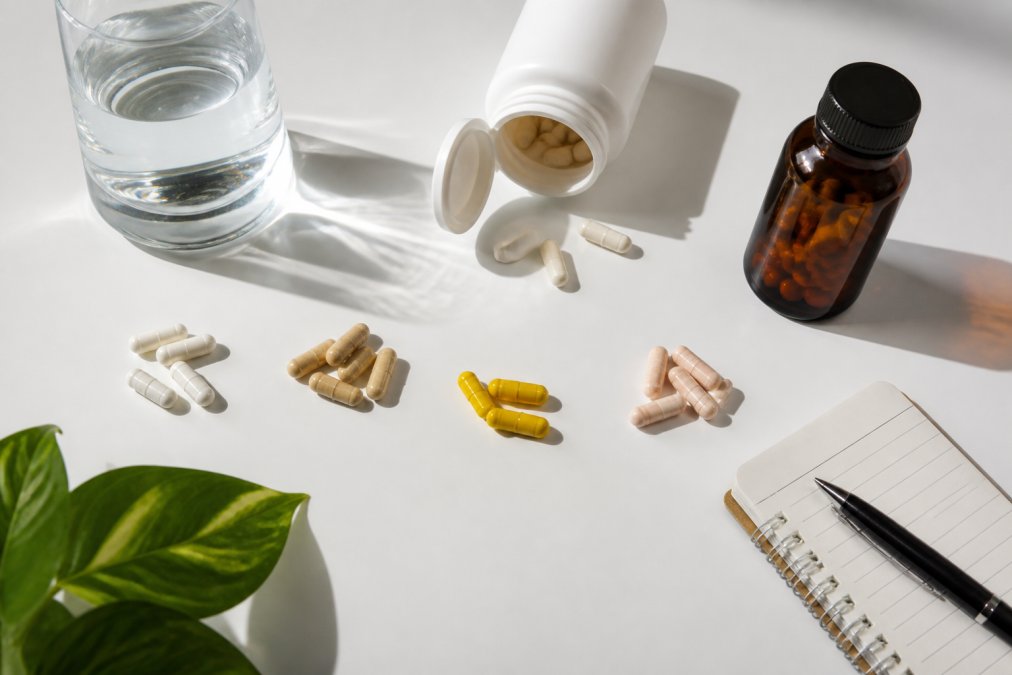
1. Nicotinamide Mononucleotide (NMN)
NMN is a direct precursor to NAD+, requiring just one enzymatic conversion step. It enters cells through a specific transporter pathway and bypasses the rate-limiting enzyme nicotinamide phosphoribosyltransferase that restricts other precursors.
Because it sits one step away from NAD+, the body converts it with minimal waste. Research suggests NMN supports sirtuin activation and neuroprotection, making it a leading choice for healthy aging.
2. Nicotinamide Riboside (NR)
Nicotinamide riboside is another vitamin B3 derivative that converts to NAD+ through a salvage pathway. Unlike NMN, NR requires an additional phosphorylation step before it becomes NMN, then NAD+, making it slightly less direct though still effective.
NR has been studied extensively in human trials for its ability to raise NAD+ levels and support mitochondrial function. However, some research indicates NR can trigger the methylation pathway, potentially increasing demand for methyl donors like TMG.
3. Nicotinamide (NAM)
Nicotinamide, also called niacinamide, is the simplest form of vitamin B3. It converts to NAD+ through the salvage pathway but is also a product of NAD+ breakdown, creating a feedback loop. High doses can inhibit sirtuin activity, which may reduce some longevity benefits.
NAM is inexpensive and widely available, supporting cellular metabolism and skin health. The trade-off is that it may not deliver the same magnitude of NAD+ elevation as NMN or NR.
4. Tryptophan
Tryptophan is an essential amino acid that feeds the de novo synthesis pathway, building NAD+ from scratch. This route is slow and tightly regulated; most dietary tryptophan goes toward protein synthesis and serotonin production, leaving little for NAD+.
Food sources like turkey, eggs, and pumpkin seeds provide tryptophan naturally, but this pathway contributes modestly to overall NAD+ levels. It is not a practical strategy for significantly boosting NAD+.
5. Nicotinic Acid (NA)
Nicotinic acid, the form of vitamin B3 found in fortified foods, raises NAD+ effectively but causes an uncomfortable flushing sensation from skin vasodilation. Extended-release versions reduce flushing but may carry liver enzyme concerns at high doses.
NA remains useful in clinical settings for managing cholesterol, yet its side effects make it less attractive for daily longevity use.
NMN vs NR for Longevity: Which Precursor Wins?
The NMN vs NR debate comes down to conversion efficiency and personal preference. NMN requires one step to become NAD+, while NR needs two. Studies suggest NMN may enter cells directly, whereas NR relies on extracellular conversion first.
NMN delivers a more direct boost to NAD+ levels, which matters when targeting cellular repair and energy. NR has a longer research history, but NMN's specificity gives it an edge for aging-focused goals.
If you want the most direct route to NAD+, NMN is the stronger choice. If you value decades of human safety data, NR has more published trials behind it.
Optimal Dosage for NAD+ Boosters
Optimal dosage for NAD+ boosters depends on your baseline levels, age, and specific health goals. Here is an individualized framework grounded in current clinical practice.
Start With Your Age, Not a Guess
NAD+ levels decline roughly 1-2% per year after age 40, but the rate varies widely between individuals (the NIH). A common clinical pattern is:
- Ages 30-40: 250 mg of NMN or NR daily is often sufficient for maintenance, especially if you exercise regularly and sleep well.
- Ages 40-55: 500 mg daily is a typical starting point. Many practitioners suggest splitting the dose, 250 mg in the morning and 250 mg in the early afternoon, to maintain steady levels.
- Ages 55-70: 750 mg to 1,000 mg daily is more common, often combined with a methyl donor like TMG (tri-methylglycine) at 500-1,000 mg to support the methylation cycle.
- Over 70: Some protocols go up to 1,500 mg daily under professional supervision, though long-term safety data beyond 12 months is still limited.
Measure, Don't Assume
You can actually measure your NAD+ levels. At-home dried blood spot tests are available through companies like TruDiagnostics and Jinfiniti Precision Medicine. These tests measure NAD+ and its oxidized form NADH, giving you a ratio that reflects cellular energy status.
A typical protocol looks like this:
- Baseline test: Measure your NAD+ levels before starting supplementation.
- Supplement for 8 weeks at a chosen dose.
- Follow-up test: Compare levels. If NAD+ increased by 30-50% and you feel better, hold the dose. If not, increase by 250 mg and retest in another 8 weeks.
This approach removes the guesswork and helps you avoid over-supplementing, which wastes money and may strain methylation pathways.
Watch for Methylation Strain
High-dose NMN or NR (above 750 mg daily) increases demand for methyl donors. Without adequate intake of folate, B12, and TMG, some people experience elevated homocysteine, a risk factor for cardiovascular issues.
Timing and Cycling
NAD+ levels follow a circadian rhythm, peaking in the morning. Taking your supplement within 30 minutes of waking aligns with this natural cycle. Some practitioners recommend a 5-days-on, 2-days-off schedule to prevent receptor desensitization, though human data on cycling is sparse.
The Bottom Line on Dosing
Start low, measure, and adjust. The right dose is the one that raises your NAD+ levels meaningfully without side effects like nausea, flushing, or sleep disruption. If you cannot access testing, the next best approach is to track energy, recovery, and mental clarity over a 6-week trial period and adjust based on subjective response.
How to Boost NAD+ Levels Naturally Through Diet
Dietary sources alone rarely raise NAD+ to therapeutic levels, but they support baseline health. Foods rich in vitamin B3 include chicken, tuna, salmon, and mushrooms; dairy, green vegetables, and whole grains contribute smaller amounts.
Lifestyle factors that reduce NAD+ consumption also help. Regular exercise, particularly high-intensity interval training, stimulates mitochondrial biogenesis and may slow NAD+ decline. Caloric restriction and intermittent fasting appear to support NAD+ homeostasis by activating sirtuin pathways.
:::tip Pair your NAD+ precursor with resveratrol or quercetin. These compounds activate sirtuins, the same longevity proteins that NAD+ fuels, creating a synergistic effect that amplifies results.
Poor sleep increases oxidative stress and accelerates NAD+ depletion. Prioritizing seven to nine hours of restful sleep supports every other effort you make.
Safety, Purity, and Third-Party Testing
The NAD+ supplement market is a regulatory gray area. The U.S. Food and Drug Administration (FDA) regulates these products as dietary supplements under the Dietary Supplement Health and Education Act of 1994 (DSHEA). This means manufacturers are responsible for product safety and label accuracy, but the FDA does not review products for efficacy or purity before they hit the market. The agency only steps in after adverse events are reported.
This creates a wide quality gap between brands. Some products contain exactly what the label claims; others contain fillers, heavy metals, or far less active ingredient than advertised. Independent testing is the only way to verify what you are actually buying.
How to Read a Certificate of Analysis (CoA)
A Certificate of Analysis is a document from an independent lab that verifies a product's identity, purity, and potency. Here is what to look for:
- Third-party lab name: The CoA should come from an independent lab like Eurofins, NSF International, or ConsumerLab.com, not from the manufacturer's own in-house lab.
- Batch-specific testing: The CoA must match the batch number printed on your bottle. A generic CoA on a website is not sufficient.
- Active ingredient verification: The CoA should show the actual measured amount of NMN or NR, not just the label claim. A tolerance of ±5% is standard; anything wider is a red flag.
- Heavy metals and contaminants: Look for results for lead, arsenic, cadmium, and mercury. These should be below FDA-established limits for dietary supplements.
- Microbial testing: The CoA should confirm the absence of harmful bacteria, yeast, and mold.
If a brand does not publish batch-specific CoAs or refuses to provide them on request, treat that as a warning sign.
GMP Certification Is Not Enough
GMP (Good Manufacturing Practice) certification means the facility follows FDA-mandated quality control procedures. It is a baseline requirement, not a differentiator. Many reputable brands are GMP-certified, but GMP does not guarantee that the final product contains the labeled amount of active ingredient. Third-party testing is the layer that closes that gap.
What the Safety Data Actually Shows
Human clinical trials for NR have been running for over a decade. Studies published in journals like Nature Communications and Cell Reports show that NR at doses up to 1,000 mg daily is well-tolerated for up to 12 weeks, with mild side effects like headache, fatigue, and gastrointestinal discomfort reported in a small percentage of participants.
NMN human data is newer but growing. A 2023 randomized controlled trial published in npj Aging found that 250 mg of NMN daily for 12 weeks was safe and well-tolerated in healthy adults. Another 2024 study in GeroScience examined 1,000 mg daily for 8 weeks and reported no serious adverse events.
However, no multi-year human safety data exists for either compound. The longest published trials run 12-16 weeks. This is a critical gap. The National Institutes of Health (NIH) is funding ongoing research, but until longitudinal data emerges, a conservative approach is warranted.
Red Flags to Avoid
- Proprietary blends: If a label lists a "proprietary blend" without disclosing individual ingredient amounts, you cannot verify the dose of NMN or NR.
- No CoA available: As noted above, this is the single biggest red flag.
- Outrageous claims: Products promising "reversal of aging" or "cellular immortality" are marketing hype, not science.
- Unusually low prices: High-quality NMN costs roughly $0.50-$1.00 per 500 mg dose. If a product is significantly cheaper, it is likely cutting corners on raw material purity or testing.
A Practical Checklist Before You Buy
- Does the brand publish batch-specific CoAs from an independent lab?
- Is the manufacturing facility GMP-certified?
- Does the label clearly state the exact milligram amount of the active ingredient?
- Does the brand disclose the form of NMN or NR (e.g., crystalline NMN vs. a proprietary blend)?
- Are there published human trials on the specific product or its key ingredients?
Answering "yes" to all five questions is a strong signal that you are buying a quality product. Anything less warrants caution.
Conclusion: Choosing Your NAD+ Precursor
Choosing the right NAD+ precursor comes down to conversion efficiency, tolerability, and product quality. NMN offers the most direct path to raising NAD+ levels, making it the strongest candidate for healthy aging protocols. NR provides a well-studied alternative, while dietary sources support baseline health without dramatic effect.
The challenge is finding a supplement you can trust. Many products on the market make bold claims without independent verification. Rejuven8 Pharmaceuticals offers a science-backed NMN formula featuring advanced delivery technology for superior absorption. Our clinically validated approach supports cellular repair, energy production, and sustained vitality.
Get started with Rejuven8 Infinity and support your cellular health with a formula designed for real results. Shop Now.
Frequently Asked Questions
Which NAD+ precursor is the most effective?
For healthy aging, NMN and NR are the most effective precursors. NMN requires one less enzymatic conversion step to become NAD+, which may offer a more direct pathway. NR has more extensive long-term human trial data. Your choice depends on your specific health goals and budget. High-quality NMN supplements, such as Rejuven8 Infinity, provide a direct and potent option for boosting NAD+ levels.
What is the primary difference between NMN and NR?
The key difference lies in their structure. NMN is a larger molecule that includes a phosphate group, while NR is a smaller molecule that can enter cells more easily. Once inside, NR must be converted to NMN before becoming NAD+. NMN is already one step closer in the synthesis pathway, which some research suggests may make it a more efficient precursor for cellular energy and sirtuin activation.
How long does it take to see results from NAD+ boosters?
Many users report noticing improvements in energy and mental clarity within 1 to 2 weeks of consistent use. However, the most significant benefits for cellular health and healthy aging occur over 2 to 3 months of daily supplementation as NAD+ levels steadily rise. Consistent daily intake is more important than occasional high doses for achieving sustained results.
Is it better to take NAD+ directly or use precursors?
Supplementing with NAD+ directly is generally ineffective because the molecule is too large to cross cell membranes easily. Precursors like NMN and NR are smaller and designed to enter cells where they are converted into NAD+. Focusing on high-quality precursors is the most scientifically supported approach for raising intracellular NAD+ levels.