

Best Tru Niagen Alternatives for Energy in 2026
Table of Contents
- Why Tru Niagen May Not Be Enough for Your Energy Goals
- Comparison Table: Top NAD+ Boosters for Energy
- NMN vs NR for Energy: Which Precursor Delivers Better Results?
- Rejuven8 Infinity: A High-Purity NMN Option for Cellular Energy
- NMN Dosage for Energy: How Much Do You Actually Need?
- What to Look for in a High-Quality NAD+ Supplement
- Safety, Side Effects, and Clinical Research on NAD+ Boosters
- Conclusion
- Frequently Asked Questions
Last Updated: September 23, 2026
Why Tru Niagen May Not Be Enough for Your Energy Goals
If you're searching for tru niagen alternatives for energy, you're likely one of many adults who tried nicotinamide riboside (NR) and felt underwhelmed by the results. This guide from Rejuven8 Pharmaceuticals examines why that happens and what to look for instead.
Tru Niagen built its reputation on NR, a precursor the body converts into NAD+, a co-enzyme central to cellular metabolism and ATP synthesis. The logic is sound: NAD+ declines with age, and restoring it should support energy production. The problem is that NR must pass through a two-step enzymatic conversion before your cells can use it, and that pathway gets less efficient as you get older.
A common mistake is assuming any NAD+ booster works the same way. It doesn't.
Many users report that NR gave them modest results at best, or nothing noticeable at all. That gap between marketing claims and lived experience is exactly why so many people now look at NMN (nicotinamide mononucleotide) instead.
Comparison Table: Top NAD+ Boosters for Energy
The table below summarizes the main precursor options and how they compare on the factors that matter most for energy support.
| Option | Precursor | Conversion Steps | Typical Daily Dose | Best For |
|---|---|---|---|---|
| Rejuven8 Infinity | NMN | One step to NAD+ | Per label guidance | Cellular energy and focus |
| NR capsules | Nicotinamide Riboside | Two steps to NAD+ | 300 mg | General NAD+ support |
| Niacin (NA) | Nicotinic acid | Multi-step, flushing | 500 mg | Budget buyers |
| Nicotinamide | NAM | Multi-step | 500 mg | Skin-focused users |
| NAD+ IV therapy | Direct NAD+ | None, clinical setting | Varies | Clinical supervision only |
Each option has trade-offs. NR and NMN are the two most studied, and the choice between them comes down to conversion efficiency and purity.
NMN vs NR for Energy: Which Precursor Delivers Better Results?
The short answer most guides give is that NMN converts to NAD+ in one enzymatic step while NR requires two. That's true, but it's an incomplete picture, and it's the reason so many people cycle through precursors without ever finding one that works.
Here's the actual pathway. NR enters the cell and is phosphorylated by nicotinamide riboside kinases (NRK1 and NRK2) into NMN. That NMN is then converted to NAD+ by nicotinamide mononucleotide adenylyltransferases (NMNAT1, NMNAT2, and NMNAT3). NMN, by contrast, is thought to enter cells through a dedicated transporter and then be converted to NAD+ by the same NMNAT enzymes, one step instead of two. The catch is that NRK activity declines with age and varies between tissues, which is one reason NR's effects can be inconsistent from person to person.
There's a second layer most articles skip: the oral bioavailability question. Both NR and NMN are subject to digestion in the gut, and a portion of what you swallow is broken down before it reaches circulation. Research in animal models suggests that orally administered NMN is taken up efficiently, but human pharmacokinetic data is still limited. What this means practically is that delivery format, enteric coating, sublingual absorption, or plain capsule, can matter as much as which precursor you choose.
| Factor | NR (Nicotinamide Riboside) | NMN (Nicotinamide Mononucleotide) |
|---|---|---|
| Enzymatic steps to NAD+ | Two (NRK, then NMNAT) | One (NMNAT) |
| Rate-limiting enzyme | NRK1/NRK2 (declines with age) | NMNAT (more stable) |
| Typical research dose | 300 mg daily | 250-500 mg daily |
| Human clinical data | More published trials | Fewer, but growing |
| Cost per 500 mg (typical) | $1.50-$3.00 | $2.00-$5.00 |
| Common user complaint | Modest or no perceived effect | GI upset at high doses |
A common pattern reported by users comparing tru niagen alternatives is that the difference isn't dramatic, it's incremental. That's consistent with the biology: if your NRK enzymes are functioning normally, NR works fine. If they aren't, NMN bypasses the bottleneck. There's no reliable commercial test for NRK activity, so the practical approach is to try one precursor at a meaningful dose for four to eight weeks before concluding it doesn't work.
What most guides miss is that precursor choice is only half the equation. Purity, dose, and delivery format determine whether the compound survives digestion and reaches circulation in a usable form. A 500 mg NMN capsule that's 60% pure delivers 300 mg of active compound, less than a properly dosed 300 mg NR capsule. This is why cost-per-milligram-of-verified-active-ingredient, not cost-per-bottle, is the number that actually matters.
If you're coming from NR and felt nothing, the issue may not be the precursor class at all. It may be the dose, the formulation, or the absence of supporting ingredients that help the pathway function.
Rejuven8 Infinity: A High-Purity NMN Option for Cellular Energy
Rejuven8 Infinity is a pharmaceutical-grade NMN formula built around high-purity sourcing and enhanced bioavailability. It's manufactured in GMP-certified facilities and third-party tested for purity and potency, which addresses the verification gap that trips up most buyers.
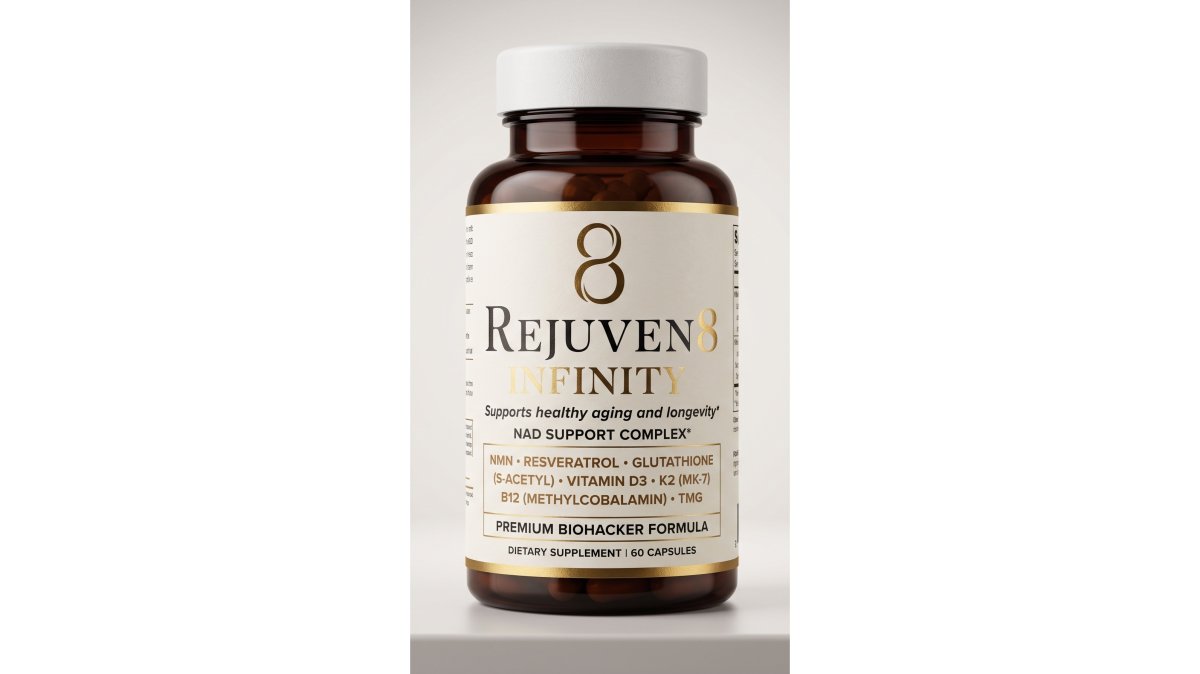
The formula supports NAD+ production, cellular energy metabolism, mental clarity, cardiovascular health, and DNA repair. It's designed for adults dealing with age-related fatigue who want a simple daily routine rather than a complicated stack.
At $49.99, it sits above bargain marketplace options, and that's deliberate. The price reflects testing, purity standards, and delivery technology you won't find in a generic capsule.
NMN Dosage for Energy: How Much Do You Actually Need?
NMN dosage for energy varies by individual, but most research protocols use between 250 mg and 500 mg daily. Higher doses aren't automatically better, and dosage efficacy depends on how well the compound is absorbed.
For NMN dosage for energy, consistency matters more than hitting a specific number. Taking it at the same time each day supports steadier NAD+ levels than sporadic high doses.
- Start at the lower end of the range and assess over several weeks
- Take with water, away from heavy meals if you notice digestive discomfort
- Follow label guidance or your healthcare professional's direction
- Track energy and focus in a simple daily note
Users with sensitive stomachs often do better splitting the dose or taking it with food.
What to Look for in a High-Quality NAD+ Supplement
Most guides tell you to 'look for third-party testing' and stop there. That advice is useless without knowing which labs count, what a certificate of analysis actually shows, and how to read one. Here's the concrete version.
Third-party testing, the specifics. Ask for the certificate of analysis (CoA), it should list the testing lab, the lot number, the assay result (the actual percentage of NMN or NR present), heavy metals screening, microbial testing, and residual solvent testing. If a brand won't share a CoA, that's your answer.
Manufacturing standard. GMP certification (Good Manufacturing Practices, enforced by the FDA for dietary supplements) covers documented processes for potency and shelf stability. This matters because NMN degrades with heat and moisture. A GMP facility with climate-controlled storage and stability testing will deliver closer to label potency at the end of shelf life than a facility without those controls.
Delivery and absorption. Absorption kinetics determine how much of the compound reaches your bloodstream. A formula optimized for bioavailability will outperform a raw powder of the same dose.
Synergistic ingredients, the gap most guides miss. NMN and NR both consume methyl groups during metabolism. Over time, that can deplete methyl donors.
Safety, Side Effects, and Clinical Research on NAD+ Boosters
NAD+ precursors have a generally favorable safety profile in published research, with most reported side effects being mild digestive upset. User-reported side effects include nausea and bloating, usually tied to high doses taken on an empty stomach.
Conclusion
Age-related fatigue is frustrating, and finding a precursor that actually delivers can feel like guesswork. Rejuven8 Pharmaceuticals built Rejuven8 Infinity around high-purity NMN, enhanced bioavailability, and third-party testing, so you're not paying for a label you can't verify.
Frequently Asked Questions
What is the difference between NR and NMN for energy?
NR (Nicotinamide Riboside) and NMN (Nicotinamide Mononucleotide) are both NAD+ precursors. NR requires conversion to NMN before becoming NAD+, while NMN is one step closer. Some research suggests NMN may be more direct, but both can support cellular metabolism and energy production. Individual results vary based on dosage, bioavailability, and overall health.
Are there more effective NAD+ boosters than Tru Niagen?
Effectiveness depends on purity, dosage, and absorption. Some NMN supplements, like Rejuven8 Infinity, are optimized for maximum absorption. Third-party testing and GMP certification also matter. Compare ingredients rather than relying on brand recognition alone.
How do NAD+ supplements improve physical energy levels?
NAD+ supports mitochondrial function and ATP synthesis, which are essential for cellular energy. As NAD+ declines with age, supplementing with precursors like NMN or NR may help restore levels, potentially improving energy, focus, and metabolic health. Results typically take weeks to months.
What should I look for in a high-quality NAD+ supplement?
Prioritize third-party testing, GMP certification, and clear dosage information. Check for purity standards. Avoid products with vague claims. Rejuven8 Infinity, for example, is third-party tested and manufactured in GMP-certified facilities.