

How to Boost Cellular Energy Levels: A 2026 Guide
Table of Contents
- Understanding Cellular Energy and Why It Declines
- Step 1: Optimize Sleep Quality and Circadian Rhythm Alignment
- Step 2: Eat Foods That Increase ATP Production
- Step 3: Add Mitochondrial Health Supplements to Your Routine
- Step 4: Incorporate Movement and Cold/Heat Exposure
- Recognizing Signs of Mitochondrial Dysfunction
- Managing Stress and Cortisol for Sustained Energy
- Conclusion: Your Path to Restored Vitality
Last Updated: August 5, 2026
Understanding Cellular Energy and Why It Declines
Cellular energy production is the process by which your cells convert nutrients into ATP (adenosine triphosphate), the energy currency that powers every biological function in your body. This happens primarily in your mitochondria, the powerhouse organelles responsible for generating the chemical energy your cells need to function. When mitochondrial efficiency declines, you feel it immediately: fatigue sets in, mental clarity fades, and even simple tasks feel exhausting.
The reason your energy crashes as you age isn't mysterious. Your mitochondria gradually lose their ability to produce ATP efficiently. NAD+, a critical coenzyme that fuels mitochondrial function, naturally declines by roughly 50% between your twenties and your sixties. This isn't inevitable decline you have to accept. At Rejuven8 Pharmaceuticals, we offer a science-backed NMN formula designed to optimize cellular health and combat the natural decline associated with aging. The strategies in this guide work because they address the root cause: mitochondrial dysfunction.
Most people blame their low energy on stress, poor sleep, or aging itself. Those factors matter, but they're symptoms of a deeper problem. Your cells simply aren't producing enough energy. The good news is that you can restore cellular energy production by optimizing the conditions your mitochondria need to thrive. This guide walks you through a science-backed protocol to boost cellular energy levels systematically.
Step 1: Optimize Sleep Quality and Circadian Rhythm Alignment
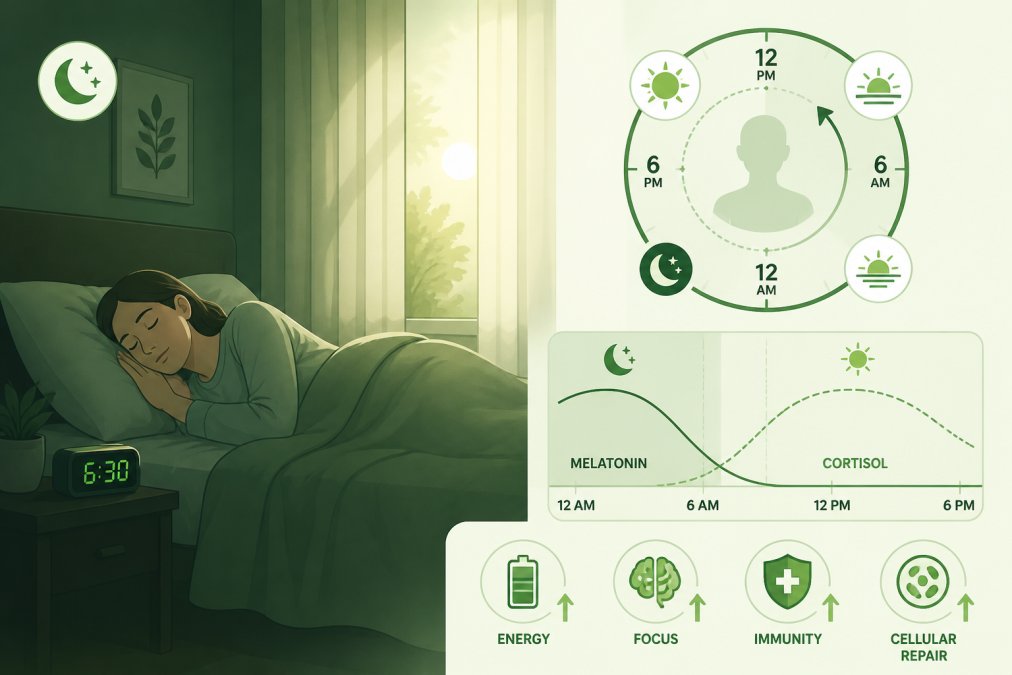
Sleep isn't just rest, it's when your cells repair themselves and your mitochondria reset their energy production capacity. Poor sleep quality directly impairs ATP production and allows oxidative stress to accumulate, damaging mitochondrial DNA. The most powerful move you can make is aligning your sleep schedule with your circadian rhythm, your body's internal 24-hour clock that governs hormone release, metabolism, and cellular repair.
Here's how to optimize sleep for cellular energy:
-
Go to bed and wake at the same time every day, even weekends. Your circadian rhythm thrives on consistency. This regularity strengthens your mitochondrial function because your cells anticipate energy demands and prepare accordingly.
-
Get morning light exposure within 30 minutes of waking. Bright light in the morning sets your circadian clock and improves sleep quality at night. This signals your body when to produce cortisol (which you need for daytime energy) and when to produce melatonin (which you need for sleep).
-
Keep your bedroom cool, dark, and quiet. Temperature between 60-67°F is ideal. Darkness triggers melatonin production, which activates mitochondrial repair pathways. Light pollution disrupts this process.
-
Avoid screens for 1-2 hours before bed. Blue light suppresses melatonin and delays sleep onset, fragmenting your sleep architecture. Fragmented sleep means less time for mitochondrial repair.
-
Limit caffeine after 2 PM. Caffeine has a half-life of 5-6 hours, meaning it's still active in your system well into evening, disrupting the deep sleep stages when cellular repair happens.
Sleep quality directly determines how well your mitochondria can recover and rebuild their ATP production capacity. When your circadian rhythm is aligned, your cells spend more time in restorative phases where mitochondrial biogenesis, the creation of new mitochondria, occurs most efficiently.
Step 2: Eat Foods That Increase ATP Production
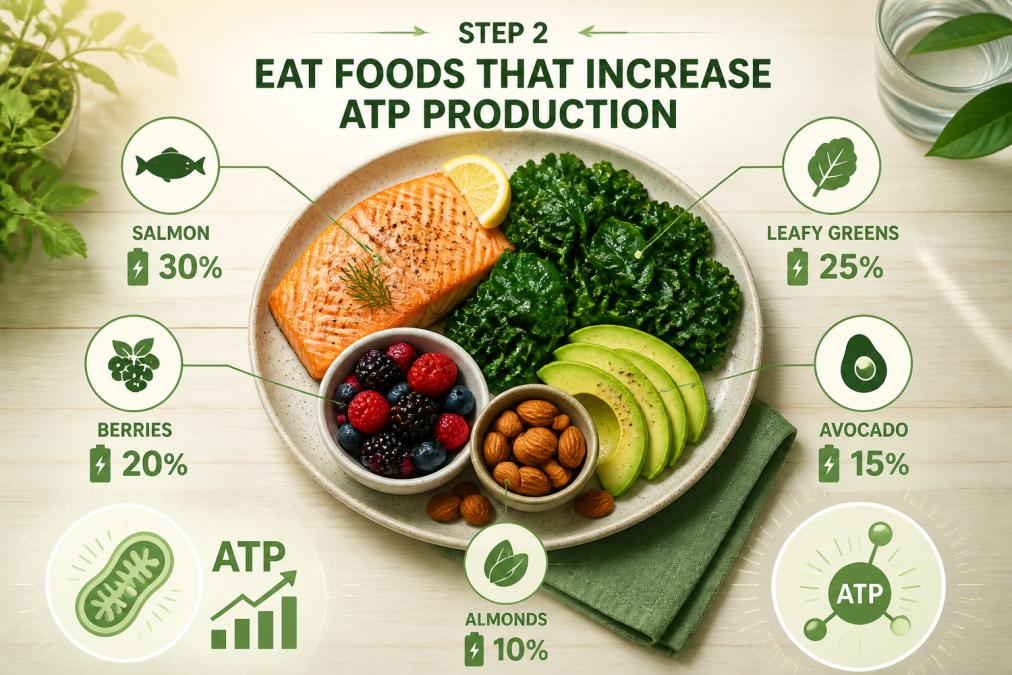
Your diet is the raw material your mitochondria use to generate ATP. Certain nutrients directly fuel the electron transport chain, the metabolic pathway that produces cellular energy. A nutrient-dense diet rich in specific foods can measurably improve how efficiently your mitochondria work.
The most important foods for mitochondrial health include:
-
Fatty fish (salmon, mackerel, sardines). These are rich in omega-3 fatty acids, which reduce oxidative stress and support the membrane structure of mitochondria. The phospholipids in fish oil directly integrate into mitochondrial membranes, improving their function.
-
Dark leafy greens (spinach, kale, collards). These contain magnesium and folate, both essential cofactors for ATP production. Magnesium specifically activates the enzymes that drive cellular energy metabolism.
-
Berries (blueberries, blackberries, raspberries). These are high in anthocyanins, powerful antioxidants that protect mitochondrial DNA from oxidative damage. Protecting your mitochondrial DNA preserves their ability to produce energy long-term.
-
Nuts and seeds (almonds, walnuts, pumpkin seeds). These provide CoQ10, alpha-lipoic acid, and B-vitamins, all critical for the energy production pathways within mitochondria. CoQ10 is particularly important; it's a rate-limiting factor in ATP synthesis.
-
Eggs. Eggs contain choline and B-vitamins that support mitochondrial function. The yolk is especially nutrient-dense, providing lutein and zeaxanthin alongside energy-supporting micronutrients.
-
Olive oil and avocados. Monounsaturated fats improve insulin sensitivity and reduce inflammation, both of which protect mitochondrial health. Anti-inflammatory food choices preserve mitochondrial function over time.
The principle here is simple: your mitochondria need specific micronutrients to perform their energy-producing functions. A diet lacking in magnesium, B-vitamins, CoQ10, and antioxidants forces your mitochondria to work harder with fewer resources. The result is fatigue, brain fog, and accelerated cellular aging.
Step 3: Add Mitochondrial Health Supplements to Your Routine
Supplements targeting mitochondrial health can fill nutrient gaps and directly support NAD+ production, the master regulator of cellular energy and repair. While a nutrient-dense diet provides the foundation, targeted supplementation accelerates results, especially for adults over 40 experiencing age-related energy decline.
The most evidence-supported supplements for cellular energy include:
-
NMN (Nicotinamide Mononucleotide). NMN is a direct precursor to NAD+, the coenzyme that powers mitochondrial energy production and cellular repair. As NAD+ declines with age, supplementing with NMN helps restore it. Rejuven8 Pharmaceuticals offers a science-backed NMN formula with advanced delivery technology designed for superior absorption, ensuring the NMN reaches your cells effectively. This matters because bioavailability determines whether the supplement actually supports your mitochondria or passes through unused.
-
CoQ10 (Ubiquinone). CoQ10 is a critical component of the electron transport chain, the final stage of ATP production. Supplementing with CoQ10 is particularly important if you take statins, which deplete natural CoQ10 levels.
-
Alpha-Lipoic Acid (ALA). ALA is a powerful antioxidant that protects mitochondrial DNA and supports the conversion of glucose to ATP. It also improves insulin sensitivity, which preserves mitochondrial function.
-
Magnesium. Many adults are magnesium-deficient, and magnesium is essential for over 300 enzymatic reactions, including those that produce ATP. Supplementing with magnesium glycinate or malate provides both the mineral and supports energy metabolism.
-
B-Complex Vitamins. B-vitamins (especially B2, B3, B5, and B12) are cofactors for the enzymes that drive ATP production. A high-quality B-complex ensures your mitochondria have the micronutrient support they need.
The key is consistency. Mitochondrial health improvements develop over weeks and months, not days. Rejuven8 Pharmaceuticals' approach combines NMN supplementation with education on the lifestyle factors that make supplementation actually work.
Step 4: Incorporate Movement and Cold/Heat Exposure
Physical activity is one of the most powerful stimuli for mitochondrial biogenesis, the creation of new, healthy mitochondria. Exercise signals your cells that they need more energy capacity, triggering the growth of new mitochondria. This is why active people have more mitochondria and better cellular energy production than sedentary people.
Here's how to use movement strategically:
-
Incorporate resistance training 2-3 times per week. Strength training creates the greatest stimulus for mitochondrial growth. Heavy resistance triggers muscle damage and repair, which activates mitochondrial biogenesis pathways.
-
Add high-intensity interval training (HIIT) 1-2 times per week. Short bursts of intense effort followed by recovery periods force your mitochondria to adapt and improve their ATP production capacity.
-
Include steady-state cardio 3-4 times per week. Walking, swimming, or cycling at a moderate intensity for 30-45 minutes improves mitochondrial oxidative capacity and supports metabolic health.
Cold and heat exposure are emerging strategies for mitochondrial activation. Cold exposure (cold showers, ice baths, or cryotherapy) triggers hormesis, a mild stress response that activates cellular repair pathways and mitochondrial biogenesis. Heat exposure (sauna use) improves mitochondrial function through similar mechanisms. Neither is essential, but both can accelerate energy improvements when combined with the strategies above.
The mechanism is straightforward: your mitochondria adapt to the demands you place on them. Regular movement and controlled stress exposure signal your cells to build more mitochondria and improve their efficiency. This is why exercise is consistently linked to improved energy levels and healthspan.
Recognizing Signs of Mitochondrial Dysfunction
Understanding the warning signs of mitochondrial dysfunction helps you catch energy problems early and address them before they worsen. Mitochondrial dysfunction doesn't happen overnight, it develops gradually as NAD+ declines and oxidative stress accumulates.
Common signs of mitochondrial dysfunction include:
- Persistent fatigue that doesn't improve with rest. This is the hallmark symptom. If sleep and relaxation don't restore your energy, your mitochondria likely aren't producing ATP efficiently.
- Brain fog and difficulty concentrating. Your brain consumes 20% of your body's energy. When mitochondria underperform, cognitive function suffers first.
- Muscle weakness or exercise intolerance. Muscles are energy-intensive tissues. Weak mitochondria mean weak muscles and poor exercise recovery.
- Metabolic dysfunction (weight gain, insulin resistance). Mitochondrial health directly influences metabolism. Poor mitochondrial function leads to metabolic slowdown.
- Mood changes and depression. Mitochondria power neurotransmitter production. Dysfunction impairs mood regulation.
- Chronic inflammation. Dysfunctional mitochondria leak reactive oxygen species, triggering systemic inflammation.
- Accelerated aging signs (skin quality, joint pain, cognitive decline). Mitochondrial dysfunction is a primary driver of cellular aging.
If you recognize multiple signs, your mitochondria need support. The good news is that all the strategies in this guide, sleep optimization, nutrient-dense eating, supplementation, and movement, directly address mitochondrial dysfunction.
Managing Stress and Cortisol for Sustained Energy
Chronic stress is a hidden mitochondrial killer. When you're stressed, your body elevates cortisol, a hormone that shifts your metabolism toward survival mode. Sustained cortisol elevation damages mitochondria, increases oxidative stress, and impairs ATP production. This is why chronically stressed people feel exhausted even when they sleep enough.
The relationship between stress and cellular energy is bidirectional: poor mitochondrial function creates fatigue, which increases stress perception, which further damages mitochondria. Breaking this cycle requires active stress management.
Effective stress management strategies include:
-
Meditation or mindfulness practice (10-20 minutes daily). These practices lower cortisol and activate the parasympathetic nervous system, allowing mitochondrial repair. Even brief daily meditation improves cellular energy over weeks.
-
Breathing exercises (4-7-8 breathing or box breathing). Slow, deliberate breathing immediately lowers cortisol and activates parasympathetic tone. Practice for 5-10 minutes when stress peaks.
-
Social connection. Meaningful social interaction reduces cortisol and supports mitochondrial health through multiple pathways. Isolation increases stress and accelerates mitochondrial decline.
-
Time in nature. Exposure to natural environments lowers cortisol and improves mood. Even 20 minutes in a park or natural setting measurably reduces stress hormones.
-
Limit information overload. Constant news consumption and social media use elevate cortisol. Set boundaries on screen time, especially before bed.
The reason stress management matters for cellular energy is that cortisol directly impairs mitochondrial function. When cortisol is chronically elevated, your mitochondria can't repair themselves effectively, and oxidative stress accumulates. Managing stress isn't optional if you want to restore cellular energy, it's foundational.
Restoring cellular energy levels is achievable when you address the root cause: mitochondrial dysfunction. Sleep optimization, nutrient-dense eating, targeted supplementation, movement, and stress management work together to rebuild your mitochondria's ability to produce ATP efficiently.
Rejuven8 Pharmaceuticals' science-backed NMN formula with advanced delivery technology accelerates this process by directly supporting NAD+ production and cellular repair. Combined with the lifestyle strategies outlined above, supplementation helps restore the energy and vitality that naturally decline with age. The result is sustained energy, sharper mental focus, and improved healthspan. Shop Now to begin your cellular rejuvenation protocol and experience the difference optimized cellular energy makes.
Frequently Asked Questions
How can I increase my cellular energy if I'm experiencing afternoon fatigue?
Start by prioritizing sleep consistency and circadian rhythm alignment, as sleep is when your cells repair and regenerate. Add nutrient-dense foods rich in B-vitamins and magnesium to support ATP production. Consider mitochondrial health supplements like NMN to boost NAD+ levels, which directly fuel cellular energy metabolism. Most people notice improvements within 2-4 weeks when combining these strategies.
What are the signs of mitochondrial dysfunction I should watch for?
Common signs include persistent fatigue despite adequate sleep, brain fog and difficulty concentrating, muscle weakness or pain, and poor exercise recovery. You may also experience metabolic issues like insulin sensitivity problems or unexplained weight gain. If you're over 40 and experiencing multiple symptoms, mitochondrial support through nutrition and supplementation can help restore cellular function and energy.
How do mitochondrial health supplements actually improve energy production?
Mitochondrial health supplements like NMN work by boosting NAD+ levels, a coenzyme critical for cellular respiration and ATP production. NAD+ naturally declines with age, reducing your cells' ability to generate energy. By restoring NAD+, these supplements support mitochondrial biogenesis and cellular repair processes. Clinical research shows that increased NAD+ improves metabolic efficiency and reduces oxidative stress in your cells.
Which foods increase ATP production most effectively?
Focus on nutrient-dense, anti-inflammatory foods: fatty fish rich in omega-3s, leafy greens for magnesium and B-vitamins, nuts and seeds for CoQ10, and berries for antioxidants. These foods provide the micronutrients your mitochondria need for optimal ATP production and cellular respiration. Avoid processed foods and excess sugar, which increase oxidative stress and impair mitochondrial function.