

How to Choose the Best NMN Supplement for Women
Table of Contents
- Why Women Need a Different Approach to NMN Supplementation
- NMN Dosage for Women: Finding Your Optimal Amount
- NMN Supplement Purity and Third-Party Testing: What to Verify
- NMN Capsules vs. Powder: Delivery Format and Bioavailability
- NMN Supplement Safety: Side Effects and Medication Interactions
- Evaluating Stability, Storage, and Additional Ingredients
- Making Your Final Decision: Key Selection Criteria
- Frequently Asked Questions
Last Updated: October 8, 2026
Why Women Need a Different Approach to NMN Supplementation
Most NMN content treats supplementation as unisex: same dose, same claims, same timeline. That framing is convenient for marketers and unhelpful for readers. A more honest starting point is to separate what is known from what is assumed, and to be clear about where women-specific evidence is thin.
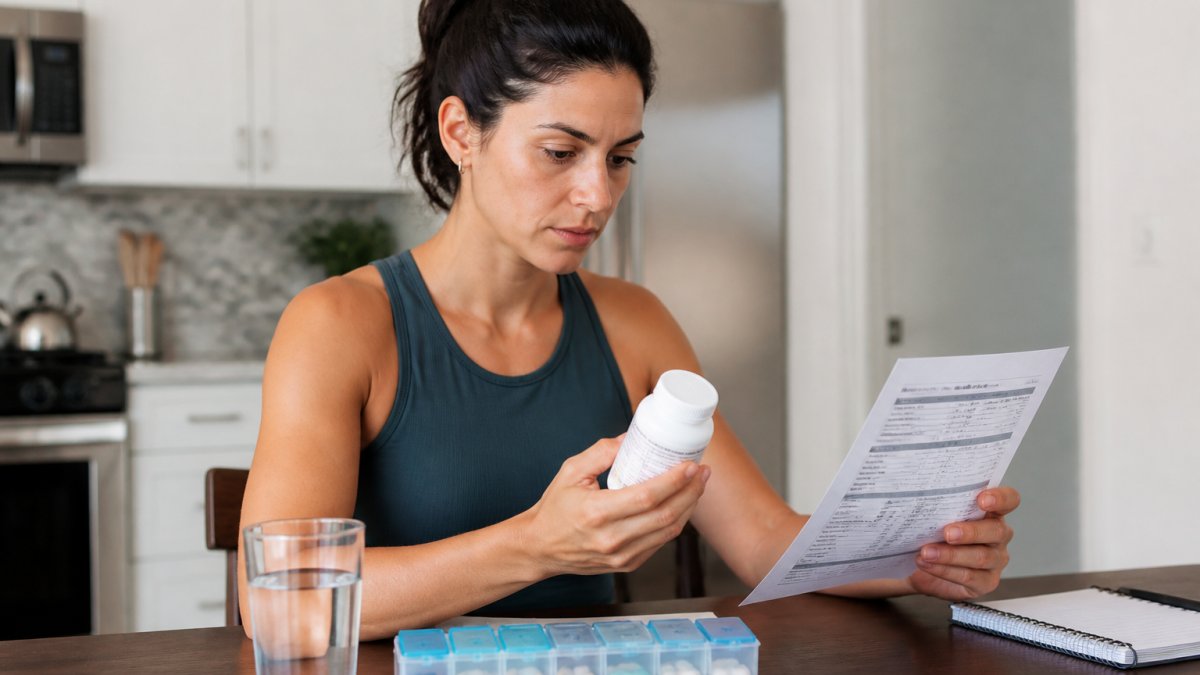
The uncomfortable reality: the human clinical literature on NMN is small, and most of it does not report results broken out by sex.
What we can say with reasonable confidence:
- NAD+ levels decline with age in both sexes. This is well established.
- NMN is a precursor that the body can convert toward NAD+ through the salvage pathway. The enzyme NMNAT and the rate-limiting enzyme NAMPT are central here.
- Oral NMN is absorbed and metabolized, but how much reaches a given tissue in humans is still being studied.
- Reported benefits in humans are largely subjective, energy, sleep, recovery, and come from small, short trials.
What we cannot say, and what no honest brand should claim:
- That NMN prevents, treats, or cures any disease.
- That women respond differently than men in a way that has been demonstrated in controlled human trials.
- That a specific dose is "optimal for women" based on sex-stratified data. It isn't. The 250-500 mg range you see everywhere is a convention, not a finding.
What changes across life stages
Rather than claiming sex-specific biology, it is more useful to think about life stage and what else is happening in your body.
Premenopausal adults. If you are menstruating regularly, iron status, thyroid function, and sleep quality can mimic or mask the fatigue people attribute to low NAD+.
Perimenopause and menopause. Sleep disruption, vasomotor symptoms, and shifts in body composition are common and can independently reduce perceived energy.
Postmenopause. Bone density, cardiovascular risk factors, and muscle mass become more relevant.
Medications and health conditions. NMN is not inert.
The practical takeaway: choose an NMN supplement based on verifiable quality, not claims of sex-specific formulation. The women-specific angle that matters is context, your life stage, medications, and labs, not a pink label.
NMN Dosage for Women: Finding Your Optimal Amount
The optimal NMN dosage for women typically ranges between 250 and 500 milligrams daily, depending on age, energy levels, and health status.
Dosage timing matters. Taking your NMN supplement for women in the morning with food optimizes absorption and aligns with circadian NAD+ rhythms. Evening dosing can interfere with sleep for some users.
A common mistake is assuming more is better.
Consider your baseline energy. If afternoon brain fog dominates your day, start at 500 milligrams; if you're moderately fatigued, begin at 250 milligrams and assess after three weeks.
NMN Supplement Purity and Third-Party Testing: What to Verify
"Third-party tested" is the most abused phrase in the supplement industry. It can mean a genuine, batch-specific analysis from an independent lab, or one test on one batch three years ago now printed on every label. The difference matters, and you can tell them apart in about ten minutes.
Start with the regulatory baseline
Dietary supplements in the United States are regulated as food, not drugs (the FDA). The FDA does not pre-approve them for safety or effectiveness; manufacturers are responsible for safety and truthful label claims, and facilities are expected to follow current Good Manufacturing Practice (cGMP) rules (the FDA). Enforcement is largely post-market, which is why independent verification is the only meaningful check on what is actually in the bottle.
What a real certificate of analysis contains
A certificate of analysis (CoA) is a lab report. A useful one will include all of the following. If any item is missing, treat the document as incomplete.
- Testing laboratory name and location. The lab should be identifiable and independent. If it shares an address or parent company with the brand, it is not independent.
- Accreditation. Look for ISO/IEC 17025, the international standard for testing and calibration laboratories. Its absence is a red flag.
- Batch or lot number. The number on the CoA must match the number printed on your bottle. A CoA for a different batch tells you nothing about the product in your hand.
- Date of analysis and date of manufacture. A CoA from two years ago does not describe a bottle made last month.
- Identity test. Confirms the material is actually NMN, not a related compound such as nicotinamide riboside (NR), nicotinamide, or niacinamide. The method is usually HPLC or LC-MS.
- Assay or potency result. The percentage of NMN by weight, or milligrams per capsule, reported as a specific number, not a range like "≥90%."
- Method of analysis. The technique used should be named. "Tested for purity" is not a method.
- Contaminant panel. Heavy metals (lead, cadmium, arsenic, mercury), microbial limits (total aerobic count, yeast and mold, E. coli, Salmonella), and residual solvents where relevant.
- Limits of detection and quantification. "Not detected" is only meaningful if you know the detection limit. Lead reported as "not detected" at 5 ppm is very different from "not detected" at 0.05 ppm.
How to verify a CoA in practice
- Find the batch number on your bottle. It is usually printed near the expiration date, sometimes on the bottom or the crimp of the cap.
- Request the CoA for that specific batch. A serious manufacturer provides it within a business day. If they send a generic PDF with no batch number, ask again, specifically.
- Match the batch number. If it does not match, the document is not about your product.
- Check the lab. Confirm it is a real, independent analytical lab with a physical address and accreditation.
- Read the assay number. If the label says 500 mg and the assay says 487 mg, that is normal variance. If it says 300 mg, the label is misleading.
- Read the contaminant results with the detection limits. A clean panel with stated limits is far more informative than one without.
- Check the date. The analysis should be recent relative to the batch.
What to do when a brand will not provide a CoA
Move on. There is no legitimate reason to withhold a batch-specific CoA from a retail customer. Deflections, "it's proprietary," "we only share with wholesalers," "the CoA is on the website" (when it is generic and has no batch number), are answers, just not the ones you want.
A note on "pharmaceutical-grade" and "GMP-certified"
These terms get used loosely. cGMP compliance is a regulatory expectation for supplement facilities, not a badge of superiority. "Pharmaceutical-grade" has no formal definition in the supplement context. What matters is the batch-specific lab data, not the adjectives on the label.
NMN Capsules vs. Powder: Delivery Format and Bioavailability
NMN supplement format affects how quickly your body absorbs it. Capsules offer convenience and precise dosing; powder allows dose flexibility and potentially faster absorption if taken sublingually.
Capsule advantages: measured doses, no taste, easy travel, longer shelf stability. Disadvantages: slower dissolution (5-15 minutes), potential fillers, harder to adjust dose mid-protocol.
Powder advantages: faster absorption in liquid, no fillers, dose flexibility, lower cost per serving.
Liposomal and slow-release formulations claim enhanced delivery and add cost. Standard capsules with consistent dosing outperform premium formats if you actually take them consistently.
NMN Supplement Safety: Side Effects and Medication Interactions
NMN is well-tolerated in most women, but understanding potential side effects and interactions protects your health.
Some women report headaches in the first week, typically a sign of rapid NAD+ mobilization, resolving within days as cells adjust.
Medication interactions warrant attention. NMN may interact with blood pressure medications, diabetes drugs, and immunosuppressants.
Pregnancy and breastfeeding lack safety data. NMN hasn't been studied in pregnant women, so avoid supplementation if you're pregnant or nursing. Women planning pregnancy should discontinue NMN at least one month before conception.
Evaluating Stability, Storage, and Additional Ingredients
NMN degrades when exposed to heat, light, and moisture, and stability directly affects potency over time.
Storage recommendations matter. NMN should be kept below 77°F (25°C), away from direct sunlight, in a dry environment. Humidity accelerates degradation.
Additional ingredients either enhance absorption or serve as fillers.
Avoid products loaded with fillers like maltodextrin, silicon dioxide, or magnesium stearate. These reduce the percentage of actual NMN per capsule.
Rejuven8 Infinity combines NMN with complementary ingredients. The formulation prioritizes bioavailability and stability, ensuring consistent potency from first dose to last.
Making Your Final Decision: Key Selection Criteria
Start by requesting the certificate of analysis. If a brand won't provide it immediately, move on. Purity below 90% wastes your money.
Assess your primary complaint.
Choose capsules for consistency, powder for flexibility. Neither delivers dramatically better results, consistency matters more than format. Expect results within 3-4 weeks, not days.
Finally, verify the company's commitment to quality. GMP certification, third-party testing, transparent labeling, and accessible customer support indicate a manufacturer serious about efficacy.
| Selection Criteria | What to Look For | Red Flags |
|---|---|---|
| Purity | 90%+ verified by CoA | No CoA available, vague claims |
| Dosage | 250-500mg for women | Extreme doses, unclear amounts |
| Format | Capsules or powder per preference | Unclear ingredient breakdown |
| Storage | Cool, dark, sealed container | Clear bottles, warm storage |
| Company | GMP certified, transparent testing | No third-party verification |
Selecting the right NMN supplement for women requires moving past marketing claims to actual product quality.
Frequently Asked Questions
How much NMN should a female take daily?
Most clinical research on NMN has used doses ranging from 250 mg to 1,000 mg per day, with 500 mg being a common starting point for women. Individual needs vary based on age, health status, and personal response. Women over 50 may benefit from doses at the higher end of this range to support NAD+ production as it naturally declines with age. Start at a lower dose and assess your response over 4-8 weeks before adjusting upward. Always consult with a healthcare provider to determine the right dosage for your specific situation.
Is NMN safe for women, including those on medications?
NMN is generally well-tolerated in most women, with minimal reported side effects in clinical studies. However, women taking medications, particularly blood thinners, diabetes medications, or hormone-related treatments, should consult their healthcare provider before starting NMN, as potential interactions have not been fully studied. Pregnant and breastfeeding women should avoid NMN due to insufficient safety data. If you have underlying health conditions or take multiple medications, working with your clinician ensures NMN fits safely into your regimen.
How can I verify that an NMN supplement has been independently tested?
Look for a Certificate of Analysis (CoA) from a third-party testing lab such as NSF International, USP, or ConsumerLab. The CoA should confirm the NMN content percentage (ideally 90% or higher purity), verify the absence of heavy metals and microbial contaminants, and match the batch number on your product label. Reputable brands display their CoA on their website or provide it upon request. If a company cannot provide a recent, specific CoA for your batch, that is a red flag regarding quality assurance.
What's the difference between NMN capsules and powder, and which is better for women?
Capsules offer convenience, precise dosing, and stability, making them ideal for busy women who want consistency without measuring. Powders allow flexible dosing and often cost less per serving, but require careful measurement and mixing. Bioavailability depends more on formulation quality and delivery technology than format alone. Some advanced formulations use liposomal or slow-release technology to improve absorption regardless of format. Choose based on your lifestyle: capsules for simplicity and travel, powder for flexibility and cost savings. Ensure whichever format you select comes from a manufacturer with verified purity and third-party testing.