

How to Improve Healthspan After 50: A Science-Backed Guide
Table of Contents
- Understanding Healthspan vs. Lifespan: Why the Distinction Matters After 50
- Physical Activity and Strength Training for Seniors
- Anti-Inflammatory Diet for Aging: Nutrition That Supports Healthspan
- Sleep Quality and Recovery: The Foundation of Healthspan
- Preventative Health Screenings for 50+: Early Detection and Biomarkers
- Cognitive Health and Mental Stimulation for Long-Term Vitality
- Stress Management, Social Connection, and Emotional Well-Being
- Cellular Health and NAD+ Support: The Missing Link in Healthspan Improvement
Last Updated: August 10, 2026
Understanding Healthspan vs. Lifespan: Why the Distinction Matters After 50
Healthspan is the number of years you live in good health, free from chronic disease and functional decline. Lifespan is simply how long you live. The gap between the two matters enormously after 50, because an extra decade of life spent managing multiple chronic conditions looks very different from an extra decade of vitality.
Most people focus on adding years to their life. The real opportunity lies in adding life to your years. Research shows that after 50, you might live to 85, but if 20 of those years involve declining energy, cognitive fog, and reduced mobility, you're not actually extending quality of life. The goal is maintaining the physical capability, mental sharpness, and vitality that make those years worth living.
At Rejuven8 Pharmaceuticals, we offer a science-backed NMN formula designed to optimize cellular health and combat the natural decline associated with aging. The good news: after 50, your healthspan is still largely within your control.
Physical Activity and Strength Training for Seniors
Strength training for seniors isn't optional after 50, it's foundational. Muscle loss accelerates dramatically in your 50s and beyond, with most adults losing 3-8% of muscle mass per decade after age 30. By 50, this compounds into noticeable weakness, reduced metabolism, and increased injury risk.
The mistake most people make is thinking cardio alone will preserve health. Walking and aerobic exercise support cardiovascular health, but they don't stop muscle loss. You need resistance work.
Building muscle mass and bone density
Resistance training directly addresses two critical issues: muscle preservation and bone density maintenance. Both decline with age and accelerate after 50 if untreated.
Start with compound movements that engage multiple muscle groups: squats, deadlifts, rows, and presses. These demand more from your nervous system and burn more calories than isolation exercises. Aim for 2-3 sessions per week, allowing at least one rest day between sessions targeting the same muscle groups.
Progressive overload matters more than intensity. You don't need to lift heavy weights, you need to gradually increase the challenge over time. Add one more rep, use slightly heavier weight, or reduce rest periods between sets. Small increments compound into significant strength gains over months.
A practical protocol: perform 8-12 repetitions of each exercise for 3 sets, twice weekly. Rest 60-90 seconds between sets. Include lower body, upper body pulling, upper body pushing, and core work each week. This simple structure preserves muscle, maintains bone density, and takes 45-60 minutes per session.

Functional movement and mobility routines
Muscle mass matters, but functional movement determines whether you can actually use that strength in real life. Can you get up from the floor without using your hands? Can you reach overhead without pain? Can you balance on one leg?
Functional fitness after 50 means preserving the movements your body evolved to do: squatting, hinging, reaching, rotating, and balancing. Mobility work addresses the stiffness that accumulates with age. Spend 10-15 minutes daily on mobility: hip openers, thoracic spine rotations, shoulder stretches, and ankle mobility work.
Balance training prevents falls, which are the leading cause of injury-related death for adults over 65. Single-leg stands, tandem walking, and balance beam work challenge your proprioceptive system. Do this 2-3 times weekly, even for just 5 minutes.
Anti-Inflammatory Diet for Aging: Nutrition That Supports Healthspan
Systemic inflammation accelerates aging and drives chronic disease development. Your diet is the primary lever you control to manage this inflammation. A Mediterranean diet pattern, rich in plant-based foods, healthy fats, and omega-3 fatty acids, consistently outperforms other eating patterns for reducing systemic inflammation and supporting healthy aging.
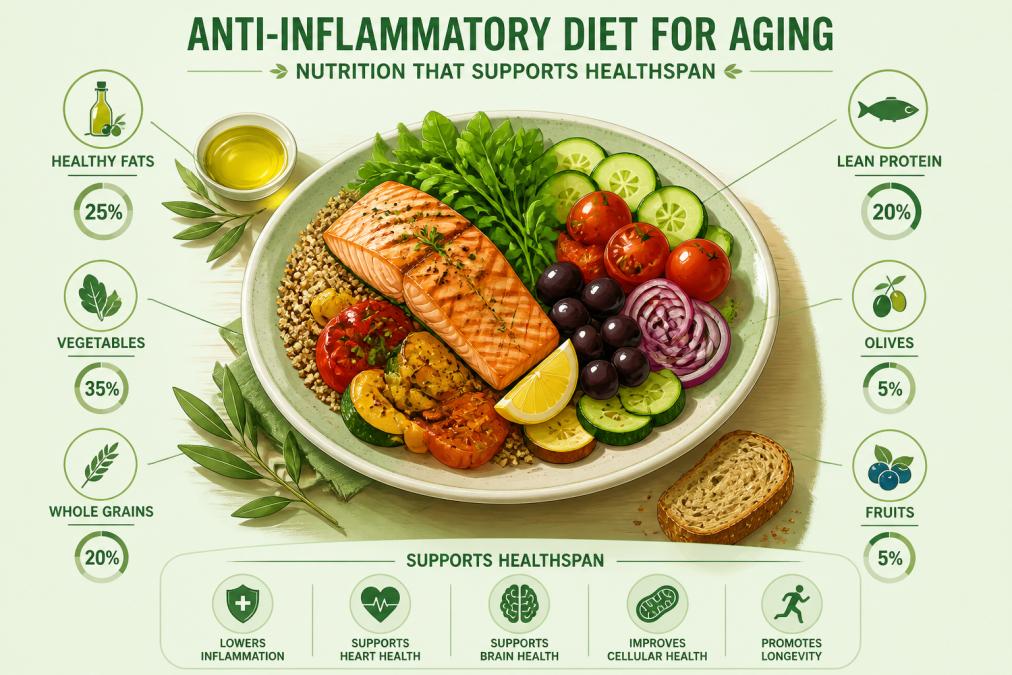
Mediterranean and MIND diet frameworks
The Mediterranean diet emphasizes olive oil, fish, nuts, legumes, whole grains, and abundant vegetables. The MIND diet (Mediterranean-DASH Intervention for Neurodegenerative Delay) is specifically designed to support cognitive function and brain health as you age.
Both share core principles: minimize processed foods, prioritize whole foods, emphasize plant-based options, and use healthy fats as your primary fat source. Practical implementation: build meals around vegetables (fill half your plate), add a protein source (fish 2-3 times weekly, legumes regularly, poultry in moderation), use olive oil as your primary fat, include nuts and seeds, and choose whole grains over refined carbohydrates.
Managing systemic inflammation through food
Specific foods actively reduce systemic inflammation. Fatty fish like salmon and sardines contain EPA and DHA, omega-3 fatty acids that directly reduce inflammatory markers. Berries contain anthocyanins, polyphenols that combat inflammation. Leafy greens like spinach and kale contain vitamin K and other compounds that support bone health and reduce inflammation.
Equally important: identify foods that promote inflammation in your body. Refined carbohydrates, seed oils high in omega-6 fatty acids, and processed foods drive inflammatory responses. Instead of asking "what should I eat?" ask "what foods promote inflammation in my body, and can I reduce them?"
Sleep Quality and Recovery: The Foundation of Healthspan
Sleep quality declines with age, and poor sleep accelerates aging more effectively than almost any other factor. Your body repairs cellular damage, consolidates memory, and regulates hormones during sleep. Without adequate sleep, these processes fail.
Most adults over 50 experience some sleep disruption. This isn't inevitable aging; it's a signal that something in your sleep environment or routine needs adjustment. Consistent sleep timing matters more than total hours. Going to bed and waking at the same time daily, even on weekends, regulates your circadian rhythm and improves sleep quality. Aim for 7-9 hours, but consistency trumps perfection.
Temperature, darkness, and quiet are non-negotiable. Your bedroom should be cool (around 65-68°F), completely dark, and quiet. Stop screen use 60-90 minutes before bed, as blue light suppresses melatonin production.
Preventative Health Screenings for 50+: Early Detection and Biomarkers
Most people see a doctor when something hurts or breaks. Preventative screening catches problems before they become symptomatic, when they're easiest to treat. After 50, regular screening for cardiovascular disease, cancer, diabetes, and bone density becomes critical.
Essential health markers to track
Blood pressure is your first marker. Optimal is below 120/80. Lipid panel (cholesterol, triglycerides, HDL, LDL) reveals cardiovascular risk. Fasting glucose and HbA1c detect diabetes risk before blood sugar becomes dangerously high.
Bone density screening (DEXA scan) measures bone mineral density and predicts fracture risk. Women should have this by 65; men by 70. Inflammatory markers like C-reactive protein (CRP) reflect systemic inflammation and predict cardiovascular and cognitive decline.
Kidney function (creatinine, eGFR) and liver function (AST, ALT) ensure your filtration and detoxification systems are working. Vitamin D levels matter enormously after 50. Low vitamin D accelerates bone loss, increases infection risk, and impairs cognitive function. Most people over 50 are deficient and need supplementation.
Screen for these markers annually or every 2 years after 50. Trends matter more than single values; gradual decline signals the need for intervention before problems become severe.
Cognitive Health and Mental Stimulation for Long-Term Vitality
Cognitive decline isn't inevitable, but it accelerates without stimulation. Your brain requires novelty, challenge, and engagement to maintain function. Learning new skills, solving complex problems, and pursuing challenging hobbies demand cognitive resources.
Social engagement powerfully supports cognitive health. Isolation accelerates cognitive decline; regular social interaction protects against it. Physical exercise supports cognitive function through increased blood flow to the brain, growth of new neurons, and reduced inflammation. Mediterranean and MIND diet patterns specifically support brain health through anti-inflammatory foods rich in antioxidants and omega-3 fatty acids.
Stress Management, Social Connection, and Emotional Well-Being
Chronic stress accelerates aging at the cellular level. Stress hormones like cortisol, when elevated chronically, increase inflammation, impair immune function, and accelerate cellular aging. Stress management isn't about eliminating stress, it's about building resilience and recovery. Meditation, breathwork, and mindfulness practices reduce stress hormone levels and activate your parasympathetic nervous system.
Social isolation is as damaging to longevity as smoking. Regular meaningful connection, whether with family, friends, or community, supports emotional health and extends healthspan. Purpose and engagement matter. People with a sense of purpose live longer and experience less cognitive decline.
Cellular Health and NAD+ Support: The Missing Link in Healthspan Improvement
Most healthspan strategies address visible aspects of aging: muscle loss, declining energy, cognitive fog. But these symptoms reflect deeper cellular dysfunction. At the cellular level, aging involves declining NAD+ levels, mitochondrial dysfunction, and accumulated cellular damage.
NAD+ (nicotinamide adenine dinucleotide) is a coenzyme present in every cell. It powers energy production, DNA repair, and cellular stress response. NAD+ levels decline by approximately 50% between age 20 and 50, and continue declining thereafter. This decline directly drives aging symptoms.
How NAD+ decline affects aging
NAD+ powers sirtuins, a family of proteins that regulate cellular aging and stress resistance. As NAD+ declines, sirtuin activity drops, and cells lose their ability to repair damage and maintain function. NAD+ also powers PARP proteins, which repair DNA damage. Without adequate NAD+, DNA damage accumulates, accelerating aging. Mitochondrial function depends on NAD+ availability; as NAD+ declines, mitochondria become dysfunctional, reducing energy production and increasing oxidative stress.
Restoring NAD+ levels addresses aging at the cellular level, supporting energy production, DNA repair, and cellular resilience.
NMN supplementation and advanced delivery technology
NMN (nicotinamide mononucleotide) is a direct precursor to NAD+. When you consume NMN, your cells convert it to NAD+, restoring NAD+ levels and reactivating the cellular processes that decline with age.
The challenge with NMN supplementation is bioavailability. Standard oral NMN has poor absorption, meaning most of what you consume is wasted. Advanced delivery technology protects NMN during digestion and enhances absorption at the cellular level. This means more of the NMN you consume actually reaches your cells and converts to NAD+, producing measurable improvements in energy, mental clarity, and recovery.
Rejuven8 Pharmaceuticals offers a science-backed NMN formula designed to optimize cellular health and combat the natural decline associated with aging. By supporting NAD+ production and utilizing advanced delivery technology for superior absorption, our protocol helps restore energy, sharpen mental focus, and promote long-term vitality. For someone experiencing the fatigue, cognitive fog, and declining recovery that typically appears after 50, NAD+ restoration provides a foundation that amplifies the benefits of everything else in this guide.
Healthspan improvement after 50 isn't about fighting aging, it's about supporting the biological systems that determine how well you age. Strength training preserves muscle and bone. Anti-inflammatory nutrition reduces disease risk. Quality sleep enables recovery. Regular screening catches problems early. Cognitive engagement and social connection protect your mind. And cellular health through NAD+ restoration addresses the root causes of aging symptoms.
These strategies work synergistically. Exercise improves sleep quality, which improves recovery, which supports muscle maintenance. Anti-inflammatory diet reduces systemic inflammation, which protects cognitive function and supports cardiovascular health. NAD+ restoration improves energy and recovery, making it easier to maintain the exercise and activity patterns that preserve healthspan.
Rejuven8 Pharmaceuticals supports this comprehensive approach through science-backed NMN supplementation with advanced delivery technology. By restoring NAD+ levels and supporting cellular repair, our protocol helps restore the energy, mental clarity, and vitality that make the years after 50 genuinely worth living. Shop Now and discover how cellular rejuvenation transforms healthspan.
Frequently Asked Questions
What is the difference between lifespan and healthspan?
Lifespan is how long you live; healthspan is how long you live well. Healthspan measures years lived in good health with energy, cognitive clarity, and independence. After 50, extending healthspan means focusing on vitality and function, not just adding years. Most people want to compress morbidity, living fully until the end, rather than spending decades managing chronic conditions. This distinction reshapes how you approach aging.
How does strength training impact healthspan in older adults?
Strength training preserves muscle mass and bone density, both critical for independence and fall prevention after 50. Regular resistance work maintains metabolic health, supports cardiovascular function, and improves balance and posture. Studies show that seniors who strength train have better mobility, fewer chronic conditions, and greater functional capacity in daily life. Even 2-3 sessions per week significantly extends both quality of life and active years.
What dietary changes are most effective for healthy aging?
The Mediterranean and MIND diets consistently support healthspan by reducing systemic inflammation and protecting cognitive function. Focus on plant-based foods, healthy fats from olive oil and fish, whole grains, and limited processed foods. These patterns lower blood pressure, improve metabolic health, and reduce risk of chronic conditions. An anti-inflammatory diet addresses the root drivers of age-related decline rather than treating symptoms.
How can I maintain cognitive function and mental clarity as I age?
Cognitive health requires mental stimulation, quality sleep, cardiovascular exercise, and stress management. Engage in learning, social connection, and activities that challenge your brain. Sleep deprivation accelerates cognitive decline, so prioritize 7-9 hours nightly. Exercise increases blood flow to the brain and supports neuroplasticity. Managing stress through meditation or social engagement protects against age-related cognitive decline and brain fog.
What are the most important health markers to track after 50?
Key biomarkers include blood pressure, cholesterol levels, fasting glucose, and inflammatory markers like C-reactive protein. Regular preventative screenings catch early signs of chronic conditions before symptoms appear. Tracking these through your healthcare provider enables early intervention. Additionally, monitoring sleep quality, energy levels, and recovery time provides practical insight into your healthspan trajectory and guides adjustments to diet, exercise, and supplementation.
How does cellular health and NAD+ support improve energy and mental focus after 50?
NAD+ is a coenzyme essential for cellular energy production and repair. NAD+ levels decline with age, contributing to fatigue, brain fog, and reduced recovery. Supporting NAD+ production through lifestyle and targeted supplementation helps restore energy, sharpen mental focus, and improve cellular recovery. Advanced delivery technology ensures absorption at the cellular level, making supplementation more effective than standard options for addressing the root cause of age-related decline.
How long does it take to notice improvements in energy and mental clarity?
Most people report noticeable improvements in energy and mental clarity within 2-4 weeks of consistent implementation, though individual results vary. Sleep quality and stress management often show benefits first. Physical improvements from strength training appear within 4-6 weeks. Cellular health support works progressively, foundational benefits emerge within weeks, while longer-term vitality and recovery improvements continue over months. Consistency matters more than speed.