

NMN Safety for Women Over 60: A Clinical Guide
Table of Contents
- What NMN Is and Why It Matters for Women Over 60
- Understanding NMN Side Effects and Tolerability
- NMN Dosage for Seniors: Evidence-Based Ranges
- NMN Drug Interactions: What You Need to Know
- How to Choose an NMN Supplement: Quality and Purity Standards
- Safety Monitoring and When to Stop Taking NMN
- Your Step-by-Step Decision Process
- Frequently Asked Questions
Last Updated: October 15, 2026
What NMN Is and Why It Matters for Women Over 60
NMN safety for women over 60 begins with understanding what you're considering.
As you age, NAD+ levels drop, which is linked to fatigue, slower thinking, and age-related changes, concerns that make NMN safety for women over 60 an important consideration.
The appeal is straightforward: support cellular energy without invasive treatments. But first, know what research shows about safety in your age group.
Short-term studies show favorable tolerability, but long-term safety data remains limited, especially for women over 60.
Understanding NMN Side Effects and Tolerability
Most people tolerate NMN well in clinical trials. Reported side effects are mild and infrequent: nausea, headache, and minor digestive discomfort.
These appeared at higher doses; at standard doses, adverse events were rare, with no serious treatment-related events in the trials reviewed to date.
Tolerability varies. Women with sensitive stomachs or gastrointestinal conditions should approach NMN cautiously, since medication history and overall health influence response.
Short-term safety (weeks to months) looks solid, but long-term safety (years of use) remains unclear. Most human trials lasted under one year, so we lack five- or ten-year data.
NMN Dosage for Seniors: Evidence-Based Ranges
Dosage matters for both safety and effectiveness, and clinical trials have tested different amounts.
Common doses studied in human research:
- 250 mg daily (lower end)
- 500 mg daily (moderate range)
- 900 mg daily (higher range)
- 1250 mg daily (upper range tested)
Dose escalation studies showed good tolerability even at higher amounts, but more is not always better.
Optimal dosage depends on factors researchers haven't fully isolated: age, weight, metabolism, and existing health conditions. A dose that works for one woman might be too much or too little for another.
Start conservatively: many practitioners recommend 250 mg daily for 2-4 weeks. If tolerability is good, discuss a higher dose with your healthcare provider.
NMN Drug Interactions: What You Need to Know
If you take prescription medications, NMN interactions are a real consideration, and the formal research is thin.
NMN is a precursor to NAD+, which sits at the center of metabolic reactions. NAD+-dependent enzymes help process drugs, regulate blood sugar, influence blood vessel tone, and support liver clearance of medications. In theory, raising NAD+ could nudge any of those pathways, but human interaction studies are incomplete for most drug classes. That gap is not evidence of danger, it is uncertainty, which you manage with your prescriber.
Why the interaction data is limited
Clinical trials of oral NMN have generally excluded people taking multiple prescription drugs, people with uncontrolled chronic disease, and people over a certain age. The population most likely to ask about NMN, women over 60 managing blood pressure, cholesterol, thyroid function, or blood sugar, is also the least represented in the safety data. Most practitioners treat this as a reason for closer monitoring, not automatic avoidance.
Medication categories that warrant a conversation
These classes are most often flagged for a pre-NMN discussion with a prescriber. The concern is not a documented interaction, but that the interaction has not been ruled out and the biology makes a plausible mechanism.
- Blood pressure medications (ACE inhibitors such as lisinopril, ARBs, beta-blockers, calcium channel blockers, diuretics). NAD+ pathways influence vascular tone, so blood pressure should be tracked if you start NMN.
- Anticoagulants and antiplatelet drugs (warfarin, apixaban, rivaroxaban, clopidogrel, daily aspirin). Any change in platelet or clotting behavior is worth watching; report unusual bruising or bleeding immediately.
- Diabetes medications (metformin, sulfonylureas, SGLT2 inhibitors, insulin). Because NAD+ is tied to glucose metabolism, blood sugar readings are the practical monitoring tool.
- Statins and other lipid-lowering drugs (atorvastatin, rosuvastatin, ezetimibe). Watch for new muscle aches, which can signal a problem with either drug class.
- Thyroid medications (levothyroxine). Absorption timing matters; separate NMN from thyroid medication by at least a few hours and recheck TSH if you notice symptom changes.
- Immunosuppressants (methotrexate, tacrolimus, biologics). Any supplement that touches cellular metabolism deserves extra caution here.
- Chemotherapy and hormone therapies. If you are in active cancer treatment or on endocrine therapy, do not start NMN without explicit oncology approval.
Conditions that change the risk calculus
Beyond medications, certain diagnoses make NMN higher-stakes: kidney disease, liver disease, uncontrolled diabetes, active cancer, and any condition requiring close medication titration all argue for prescriber involvement before you start. Not because NMN has been shown to harm these groups, but because the trials that would answer the question were never run in them.
A practical script for your prescriber visit
Bring a written list of every prescription, over-the-counter drug, and supplement you take, including doses. Ask three questions:
- Given my medication list, is there any category where you would want to monitor me more closely if I start NMN?
- Are there lab values you would want checked before I start and again at three months?
- What symptoms would make you want me to stop immediately?
A five-minute conversation with a prepared list prevents complications that are easy to avoid and hard to reverse.
How to Choose an NMN Supplement: Quality and Purity Standards
Not all NMN supplements are equal. Because NMN is sold as a dietary supplement in the United States, it is regulated under the FDA's dietary supplement framework rather than the drug approval pathway. The manufacturer, not a pre-market regulator, is responsible for verifying identity, purity, strength, and composition. Your job is to check whether they did.
What "good" looks like on paper
Four things separate a defensible product from a gamble:
1. Identity confirmation. The label should specify β-nicotinamide mononucleotide, the form used in human trials, not a related compound such as nicotinamide riboside or plain nicotinamide. These are different molecules with different evidence bases. A vague label is a disqualifier.
2. Third-party testing with a certificate of analysis (COA). A COA is a lab report showing what was actually in the batch: identity, potency, heavy metals, microbial contamination, and residual solvents.
3. GMP manufacturing. Look for a facility registered under current Good Manufacturing Practice (cGMP) standards, the baseline for consistent dosing and contamination control. Its absence is a strong signal of risk.
4. Transparent dosing per serving. The label should state milligrams of NMN per capsule or scoop, not hide the amount inside a "proprietary blend", the easiest way to underdose a product unnoticed.
How to actually verify a product before you buy
A ten-minute checklist:
- Find the COA. If it is not published, email the company for the current lot's COA; a legitimate brand responds within a business day or two.
- Read the COA, not just its existence. Look for the testing lab's name, the lot number matching the bottle, and results for potency, heavy metals, and microbials.
- Check the supplement facts panel for the exact form (β-NMN) and the milligram amount per serving.
- Look for a lot number and expiration date. No lot number means no traceability.
- Search the FDA's warning letter database and the FTC's press releases for the brand name.
- Be skeptical of prices that seem too low. NMN raw material has a real cost; a product priced far below market is usually cutting the dose or the testing.
Red flags that should end the evaluation
- No COA available at any price.
- "Proprietary blend" hiding the NMN amount.
- Claims that the product treats, prevents, or cures a disease. Those claims are not permitted for a dietary supplement and are a reliable signal that the seller is not operating carefully.
- No lot number, no expiration date, no manufacturer address.
- A single Amazon listing with no brand website behind it.
Why this matters more after 60
Women over 60 are more likely to take prescription medications, have a chronic condition, and spend real money on supplements that may not contain what the label says. The cost of a bad product is not just wasted dollars, it is the false signal. If you take an underdosed or mislabeled product and feel nothing, you may conclude NMN does not work, when the real problem was the bottle.
FDA dietary supplement guidance and warning letter database
Safety Monitoring and When to Stop Taking NMN
If you decide to try NMN, monitoring is essential. This isn't passive consumption, it's active health management.
Track these markers weekly:
- Energy levels and fatigue patterns
- Mental clarity and focus
- Digestive comfort and appetite
- Sleep quality
- Any new headaches, nausea, or unusual symptoms
Keep simple notes, a checklist or brief daily entry. After 4-6 weeks, you'll have enough data to assess whether NMN is helping or causing problems.
Stop NMN immediately if you experience:
- Severe or persistent nausea
- Unexplained headaches that worsen over time
- Significant digestive issues (cramping, diarrhea, constipation)
- Unusual changes in heart rate or blood pressure
- New allergic symptoms (rash, itching, difficulty breathing)
- Confusion or significant mood changes
Don't wait for these to "resolve on their own." Stop, rest, and contact your healthcare provider.
Long-term monitoring matters too. If you continue NMN beyond three months, schedule a doctor check-in every six months.
Your Step-by-Step Decision Process
Deciding whether to try NMN requires a structured approach.
Step 1: Assess your actual symptoms. Are you genuinely fatigued, or tired from stress, poor sleep, or lack of exercise?
Step 2: Review your medications and conditions. Write down every medication, supplement, and health condition.
Step 3: Evaluate your expectations. NMN is not a miracle.
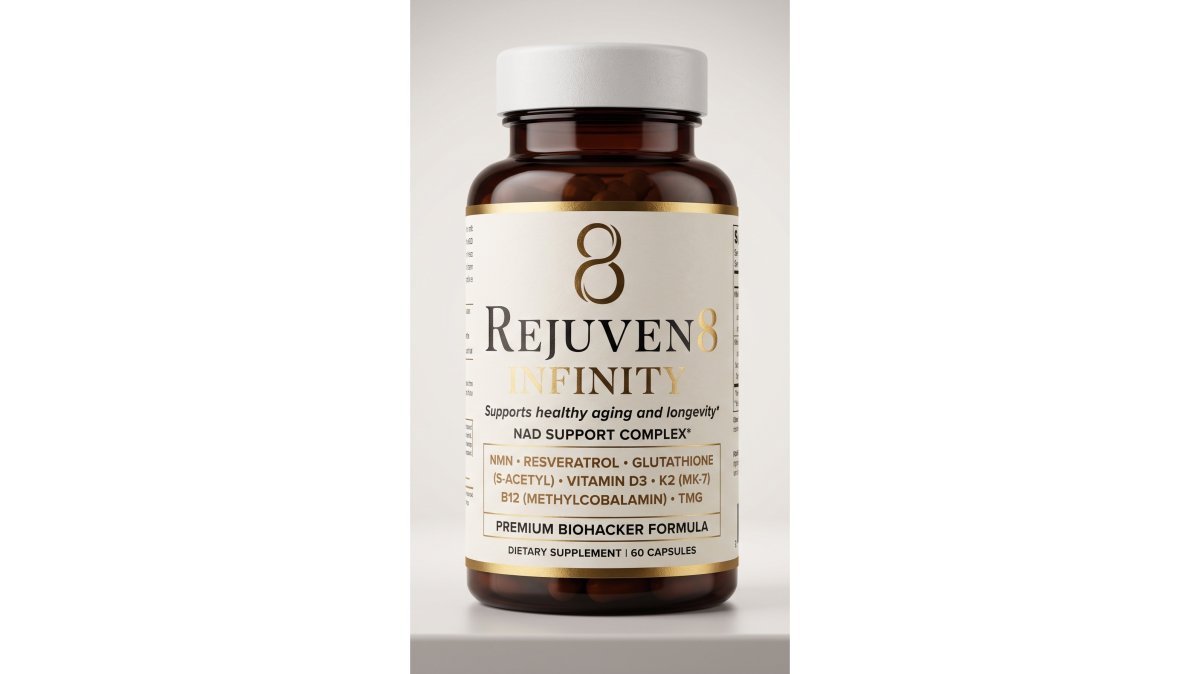
Step 4: Choose a quality product. If your doctor approves, select a third-party tested, pharmaceutical-grade option like Rejuven8 Infinity.
Step 6: Reassess at four weeks. Better, worse, or no change?
| Decision Point | Action | Timeline |
|---|---|---|
| Symptom assessment | Identify actual cause of fatigue | Before starting |
| Medical review | Discuss with your doctor | Before starting |
| Product selection | Choose third-party tested NMN | Week 1 |
| Initial dose | Start with 250 mg daily | Week 1 |
| Monitoring period | Track energy, digestion, sleep | Weeks 1-4 |
| First reassessment | Decide to continue, increase, or stop | Week 4 |
| Ongoing monitoring | Schedule doctor check-in | Every 6 months |
Taking NMN as a woman over 60 requires informed decision-making, not impulse.
Work with your healthcare provider before starting.
Frequently Asked Questions
Should women over 60 take NMN?
Whether NMN is appropriate depends on your individual health status, medications, and goals. Human clinical trials show NMN is generally well-tolerated in older adults at studied doses (250-1250 mg daily), but long-term safety data remains limited. Women over 60 considering NMN should consult a healthcare provider to assess potential benefits against your specific health profile and any existing conditions or medications that might interact with supplementation.
What are the main side effects of NMN?
Short-term clinical trials report NMN is generally well-tolerated, with mild, infrequent adverse events. Reported side effects include nausea, fatigue, headache, and mild gastrointestinal discomfort, typically at higher doses. Most treatment-related events are mild and resolve without intervention. Long-term safety data beyond 12 months is limited, so women over 60 should start at lower doses and monitor for any unusual symptoms, reporting them to a healthcare professional.
Can NMN interact with common medications for older adults?
Direct clinical evidence on NMN interactions with specific medications is sparse. However, NMN affects NAD+ metabolism and cellular energy pathways, which theoretically could interact with medications affecting similar systems. Women over 60 taking blood pressure medications, diabetes drugs, blood thinners, or statins should discuss NMN with their doctor before starting. A healthcare professional can review your complete medication list and assess interaction risk based on your individual health conditions.
How long does it take to feel NMN's effects?
Clinical trial data does not establish a standard timeline for subjective benefits in women over 60. Some users report improved energy or mental clarity within weeks, while others notice changes more gradually or not at all. Most human studies run 8-12 weeks; effects on aging markers (like NAD+ concentrations) appear measurable within that window, but perceived energy or cognitive improvements vary widely. Expect at least 4-8 weeks of consistent supplementation before assessing personal results.