

NMN vs NAD+ Injections: Which Boosts Cellular Energy
Table of Contents
- NMN vs NAD+ Injections: The Core Difference
- What Is NAD+ and Why Cellular Energy Matters
- How to Increase NAD+ Levels Naturally and Through Supplementation
- NMN Supplement Bioavailability: Absorption and Effectiveness
- NAD+ IV Therapy Benefits and Clinical Applications
- Choosing Between NMN and NAD+ Injections: A Practical Guide
- Conclusion
Last Updated: August 26, 2026
NMN vs NAD+ Injections: The Core Difference
The choice between NMN and NAD+ injections for cellular energy comes down to one fundamental distinction: NMN is a precursor that your body must convert into NAD+, while NAD+ injections deliver the active coenzyme directly into your bloodstream. This difference shapes everything about how each approach works, how quickly you might feel results, and which option suits your lifestyle and health goals.
NMN (nicotinamide mononucleotide) is a building block your cells use to manufacture NAD+. When you take an NMN supplement orally, it enters your digestive system, gets absorbed into your bloodstream, and travels to your cells where enzymes convert it into the NAD+ your mitochondria actually need. NAD+ (nicotinamide adenine dinucleotide) is the finished product, the coenzyme that directly powers cellular metabolism, DNA repair, and energy production. An IV injection of NAD+ bypasses the conversion step entirely, delivering active NAD+ directly to your cells.
The practical implication is significant. NAD+ injections offer faster systemic absorption and immediate availability at the cellular level. NMN supplements require your body to complete the enzymatic conversion, which takes time and depends on your individual metabolism. Neither approach is universally "better", the right choice depends on your bioavailability concerns, lifestyle preferences, budget, and how quickly you need to see results.
At Rejuven8 Pharmaceuticals, we understand that most people benefit from understanding the pharmacokinetics of each option before committing to one. Let's break down what the science actually shows.
What Is NAD+ and Why Cellular Energy Matters
NAD+ is a coenzyme present in virtually every cell in your body, where it plays a central role in cellular metabolism, energy production, and DNA repair. Think of it as the electron shuttle in your mitochondria, it accepts electrons from nutrients and passes them along the energy production chain, ultimately generating ATP, the molecule your cells burn for fuel. Without adequate NAD+, your mitochondria can't produce energy efficiently, and your cells begin to age faster.
The problem is that NAD+ levels decline naturally with age. By your 50s, most people have roughly half the NAD+ they had in their 20s (peer-reviewed research). This decline correlates directly with age-related fatigue, cognitive fog, reduced muscle recovery, and slower cellular repair. Your body can produce NAD+ from dietary sources and from precursors like NMN, but the conversion becomes less efficient as you age. That's why many practitioners and researchers view NAD+ restoration as a key lever for healthy aging.
NAD+ also activates sirtuins, a family of proteins involved in cellular stress resistance, metabolic regulation, and longevity pathways. When NAD+ levels are sufficient, sirtuins can respond to metabolic signals and activate cellular repair mechanisms. When NAD+ is depleted, those repair pathways don't engage effectively. This is why NAD+ restoration has become central to the anti-aging and longevity conversation. It's not just about energy; it's about whether your cells can mount an effective response to damage and stress.

Research into NAD+ biosynthesis has shown that the pathways your body uses to manufacture NAD+ require several cofactors and enzymatic steps. Nicotinamide riboside, NMN, and other precursors all feed into these pathways, but the conversion efficiency varies based on age, metabolic health, and genetics. For individuals experiencing age-related energy decline or cognitive fog, simply boosting precursor intake often isn't enough, they need either a more bioavailable precursor or direct NAD+ supplementation to restore cellular energy production.
How to Increase NAD+ Levels Naturally and Through Supplementation
Your body synthesizes NAD+ through two main pathways: the salvage pathway, which recycles NAD+ from breakdown products, and the de novo pathway, which builds NAD+ from the amino acid tryptophan. Both pathways become less efficient with age, which is why dietary and supplemental support becomes increasingly relevant as you get older.
Natural approaches to support NAD+ production include consuming foods rich in NAD+ precursors. Dairy products, chicken, tuna, and mushrooms contain small amounts of nicotinamide, a NAD+ precursor. Whey protein contains higher concentrations. However, the quantities in food are modest, you'd need to consume large amounts to meaningfully shift your NAD+ levels. For most adults over 40 seeking to restore NAD+ to youthful levels, food alone falls short.
This is where supplementation enters the picture. NMN supplements provide a precursor your body converts into NAD+ through enzymatic pathways. The advantage is convenience and oral delivery, you take a capsule or powder daily, no medical appointment required. The disadvantage is that conversion efficiency varies. If your enzymatic machinery for converting NMN to NAD+ is sluggish (which is common in aging), you may absorb the NMN but not convert enough of it into active NAD+.
NAD+ IV therapy takes a different approach. Instead of relying on your body's conversion machinery, an IV infusion delivers NAD+ directly into your bloodstream, where it circulates systemically and enters your cells. The advantage is immediate bioavailability and no dependence on your conversion capacity. The disadvantage is that IV therapy requires a medical appointment, is more expensive, and the effects are temporary, NAD+ is consumed during cellular metabolism, so you'd need periodic infusions to maintain elevated levels.
Many practitioners recommend a hybrid approach: use oral NMN supplementation as a daily maintenance strategy, and periodically use NAD+ IV therapy for acute restoration or during periods of high stress or poor recovery. This combination addresses both convenience and bioavailability.
NMN Supplement Bioavailability: Absorption and Effectiveness
Bioavailability is where NMN supplementation gets tricky. NMN is a relatively large molecule with a molecular weight of 334 Da. While it can cross cell membranes, the efficiency of absorption varies significantly based on several factors: your age, gut health, the formulation of the supplement, and whether you're taking it with food.
Studies examining NMN pharmacokinetics have shown that oral NMN absorption is dose-dependent and time-dependent (peer-reviewed research). Peak plasma concentrations typically occur 30-60 minutes after ingestion (peer-reviewed research). However, a meaningful portion of oral NMN doesn't get absorbed into your bloodstream at all, it passes through your digestive system without being used. The exact percentage depends on your individual physiology, but estimates suggest that 20-40% of ingested NMN fails to achieve systemic absorption.
For the NMN that does enter your bloodstream, your cells must then convert it into NAD+ using the enzyme nicotinamide mononucleotide adenylyltransferase (NMNAT). This conversion step is where aging becomes a limiting factor. Older adults often have reduced NMNAT activity, which means they convert NMN to NAD+ less efficiently than younger individuals. This creates a scenario where you're taking a supplement, absorbing some of it, but converting only a fraction of the absorbed amount into the NAD+ your cells actually need. injectable wellness treatments.
Advanced delivery technologies attempt to address this problem. Some formulations use liposomal encapsulation to protect NMN during digestion and enhance cellular uptake. Others combine NMN with cofactors that support the conversion process. Rejuven8 Infinity uses pharmaceutical-grade NMN with advanced delivery technology designed to improve both absorption and conversion efficiency. The goal is to maximize the amount of NMN that reaches your cells and gets converted into active NAD+.
The practical takeaway is this: not all NMN supplements are equal in terms of what actually reaches your cells. A 250 mg capsule of basic NMN may deliver significantly less bioavailable NAD+ than a 250 mg capsule of NMN with optimized delivery. When evaluating NMN supplements, look for formulations that address absorption and conversion, not just raw NMN quantity.
NAD+ IV Therapy Benefits and Clinical Applications
NAD+ IV therapy delivers pharmaceutical-grade NAD+ directly into your bloodstream, where it circulates systemically and enters cells throughout your body. The pharmacokinetics are straightforward: the infusion bypasses the digestive system entirely, avoiding absorption losses and conversion delays. Within minutes, NAD+ levels in your blood spike, and your cells begin using it for energy production, DNA repair, and sirtuin activation.
The clinical benefits often include rapid improvement in energy levels, with many individuals reporting feeling noticeably more alert and energized within hours of an infusion. Mental clarity often improves as well, particularly in individuals who came into the treatment with depleted NAD+ levels. For athletes and individuals focused on recovery, NAD+ IV therapy can accelerate muscle repair and reduce recovery time after intense training.
The mechanism is straightforward: by restoring NAD+ availability, you're restoring your mitochondria's capacity to produce ATP efficiently. This translates into more cellular energy, better DNA repair, and more strong activation of longevity pathways like sirtuins. For individuals with significant NAD+ depletion, often those experiencing chronic fatigue, cognitive fog, or poor recovery from illness, the effects can be dramatic.
However, NAD+ IV therapy has practical limitations. The effects are temporary because NAD+ is consumed during normal cellular metabolism. After the infusion, your NAD+ levels gradually decline back to baseline over days to weeks, depending on your baseline production capacity and metabolic demands. To maintain elevated NAD+ levels, you'd need periodic infusions, typically weekly or biweekly for sustained benefit. This creates an ongoing cost and time commitment.
Additionally, NAD+ IV therapy requires a medical provider trained in IV administration. It's not something you can do at home, and the cost per infusion typically ranges higher than daily oral supplementation. For some individuals, this is a worthwhile trade-off for the immediate, guaranteed bioavailability. For others, daily oral supplementation offers a more practical long-term strategy.
Choosing Between NMN and NAD+ Injections: A Practical Guide
The decision between NMN and NAD+ injections depends on your specific situation, timeline, and preferences. Here's how to think about it.
Choose NMN supplementation if: You want a convenient daily routine that doesn't require medical appointments. You're willing to accept a slower onset of effects, typically 2-4 weeks before you notice meaningful changes in energy or mental clarity. You're committed to consistent daily supplementation as a long-term strategy. You want a lower cost entry point for NAD+ restoration. You prefer oral delivery over injections. You're looking for maintenance-level NAD+ support rather than acute restoration.
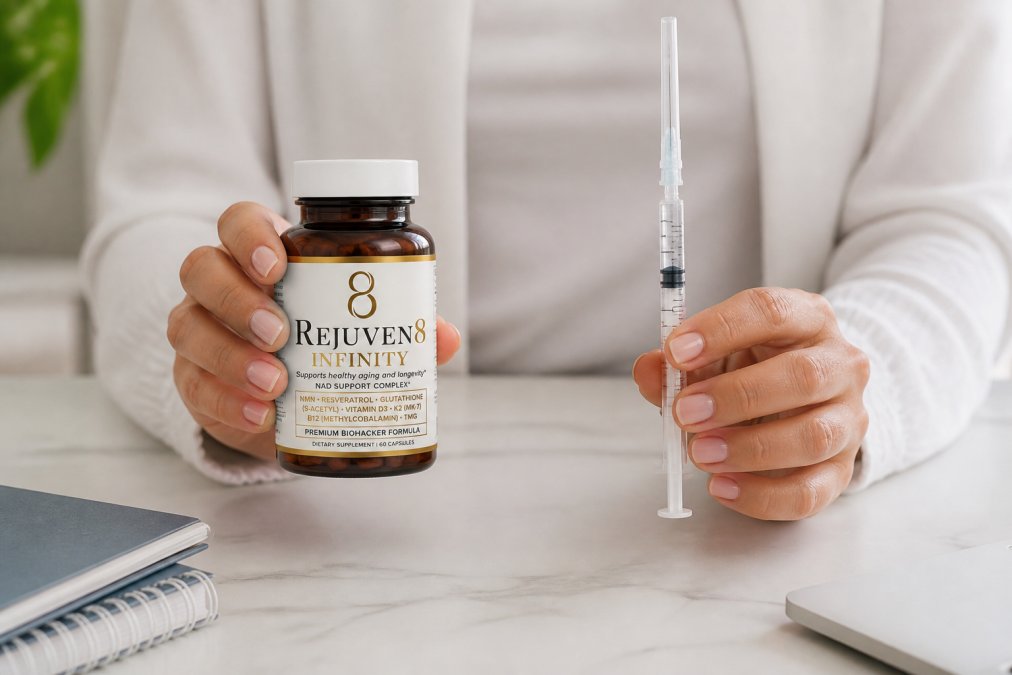
Choose NAD+ IV therapy if: You need rapid results, within hours rather than weeks. You have significant NAD+ depletion and want guaranteed systemic absorption without depending on your conversion capacity. You're dealing with acute fatigue, cognitive fog, or poor recovery that's affecting your quality of life right now. You're willing to commit to periodic infusions as part of your protocol. You have access to a qualified medical provider and the budget for regular infusions. You want to combine it with oral NMN for a comprehensive approach.
The reality is that individual response varies significantly. Some people experience dramatic improvements with oral NMN within 2-3 weeks. Others see minimal effects and benefit much more from IV therapy. Age, baseline NAD+ levels, metabolic health, and genetics all influence how you'll respond to each approach.
For busy professionals over 40 experiencing afternoon energy crashes or brain fog, NMN supplementation offers a simple daily protocol that requires no medical appointments. Rejuven8 Infinity, at $49.99 per bottle, provides pharmaceutical-grade NMN with advanced delivery technology designed to maximize absorption and cellular conversion. For someone dealing with more significant energy depletion or seeking acute restoration, NAD+ IV therapy may be worth the investment despite higher costs and time requirements.
Conclusion
The choice between NMN and NAD+ injections for cellular energy isn't about finding the objectively "best" option, it's about matching the right approach to your current situation and health goals. If you're experiencing age-related fatigue, afternoon energy crashes, or cognitive fog, your cells likely need more NAD+ to power mitochondrial energy production and activate cellular repair pathways. Whether you restore NAD+ through daily oral supplementation or periodic IV therapy depends on your timeline, budget, and individual response.
For most adults over 40 seeking to optimize energy and mental clarity, starting with a science-backed NMN formula like Rejuven8 Infinity offers a practical entry point. Our pharmaceutical-grade NMN with advanced delivery technology is designed to maximize absorption and cellular conversion, addressing the bioavailability challenges that limit basic NMN supplements. Get started with Rejuven8 Infinity and experience how cellular energy restoration can transform your daily vitality and focus.
Frequently Asked Questions
Q: Is it better to take NMN or inject NAD+ for cellular energy?
A: The choice depends on your lifestyle and goals. NMN supplements offer convenience and sustained NAD+ support through daily oral intake, making them ideal for long-term maintenance. NAD+ injections deliver immediate systemic absorption and peak levels, suiting those seeking rapid cellular energy restoration or clinical-grade results. NMN is better for consistency; NAD+ injections work faster but require medical administration.
Q: What are the bioavailability differences between NMN and NAD+?
A: NMN supplement bioavailability depends on formulation and delivery technology. Oral NMN faces intestinal barriers and hepatic metabolism, with absorption rates typically 20-40% without advanced delivery systems. NAD+ injections bypass these barriers entirely, achieving near-complete systemic absorption within minutes. Advanced NMN formulas with superior delivery technology can significantly improve oral absorption, narrowing this gap while maintaining the convenience of oral supplementation.
Q: Can I take NAD+ and NMN together for better results?
A: Yes, combining them is possible, but timing and dosing matter. NMN acts as a NAD+ precursor, so simultaneous use may create redundancy. Many protocols use NMN daily for baseline cellular support and reserve NAD+ injections for periodic boosts or targeted cellular recovery. Consult a healthcare provider before combining therapies to ensure they align with your individual health profile and avoid unnecessary overlap.
Q: How long does it take to feel energy improvements from NMN supplements?
A: Most users report noticeable energy and mental clarity shifts within 2-4 weeks of consistent NMN supplementation, though individual results vary based on baseline NAD+ levels, age, and lifestyle factors. Some feel effects within days; others require 6-8 weeks. NAD+ injections typically produce faster subjective results, with many reporting improved energy within hours. Consistency and quality matter, pharmaceutical-grade formulas with advanced delivery technology tend to show results sooner than standard options.