

NMN vs NAD+ Supplements: What's the Difference?
Table of Contents
- NMN vs NAD+: What Is the Actual Difference?
- How Your Body Converts NMN into NAD+
- Comparing Bioavailability and Absorption
- The Benefits of NMN Supplementation
- NMN Dosage and Safety: What Clinical Trials Show
- How to Boost NAD+ Levels Naturally
- Which Supplement Should You Choose?
- Conclusion
- Frequently Asked Questions
Last Updated: September 5, 2026
NMN vs NAD+: What Is the Actual Difference?
Understanding the difference between NMN and NAD+ supplements starts with a simple biological fact: NAD+ is the active coenzyme your cells use for energy, while NMN is its direct precursor. Every cell in your body relies on NAD+ for mitochondrial function, DNA repair, and the activation of sirtuins, the proteins linked to longevity. The catch is that your natural NAD+ levels decline steadily with age, and oral NAD+ supplements do not cross the cell membrane effectively (peer-reviewed research). That is why researchers and formulators at Rejuven8 Pharmaceuticals focus on precursors like NMN, which the body can convert into usable NAD+.
NMN is nicotinamide mononucleotide, a nucleotide derived from vitamin B3. NAD+ is nicotinamide adenine dinucleotide, the coenzyme itself. The distinction matters because supplementing with NAD+ directly offers poor bioavailability, whereas NMN enters cells through specific transporters and supports NAD+ biosynthesis from within. The clinical interest in NMN stems from its role in raising systemic NAD+ levels to support cellular energy and healthy aging.
How Your Body Converts NMN into NAD+
The conversion pathway is the reason NMN supplementation exists. Once absorbed, NMN undergoes enzymatic conversion into NAD+ inside your cells through a salvage pathway that recycles nicotinamide back into the coenzyme.
This process involves several steps. NMN first crosses the intestinal barrier, then enters the bloodstream, and finally passes through the cell membrane via the Slc12a8 transporter. Inside the cell, the enzyme NMNAT (nicotinamide mononucleotide adenylyltransferase) catalyzes the final conversion into NAD+. The efficiency of this pathway depends on the bioavailability of NMN and the health of your metabolic machinery.
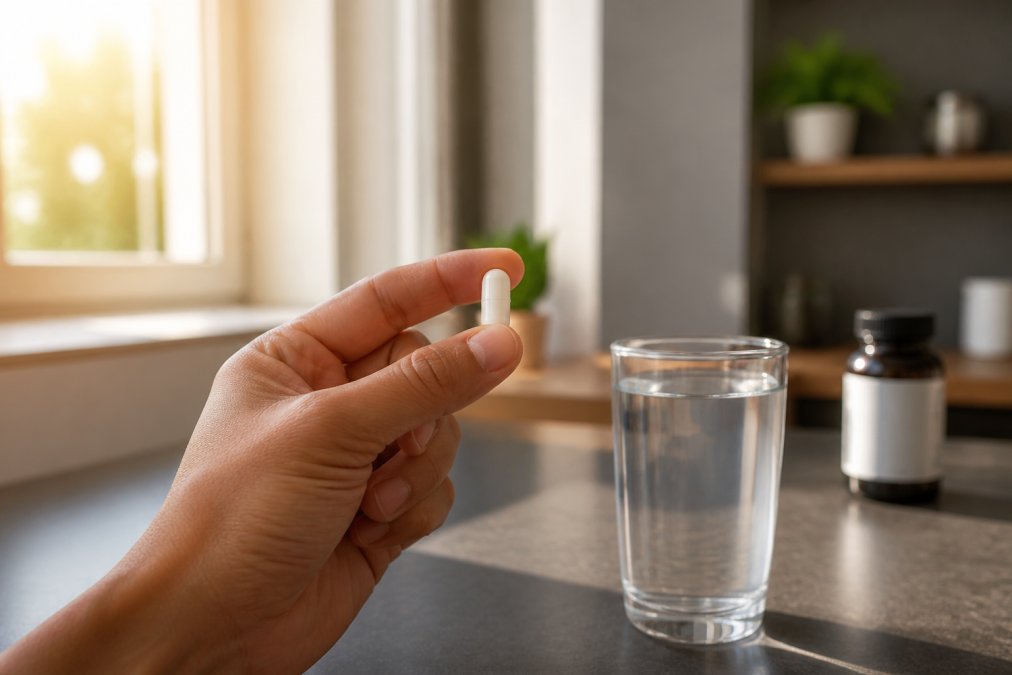
What most guides miss is that this conversion is not instantaneous. Research suggests that NAD+ levels begin to rise within hours of oral NMN intake, but sustained elevation requires consistent daily dosing. The body continuously consumes NAD+ for DNA repair and energy production, so a single dose provides a temporary peak rather than a permanent reset. This is why the difference between NMN and NAD+ supplements ultimately comes down to which molecule your body can actually use.
Comparing Bioavailability and Absorption
The question of bioavailability is the central battleground in the NMN vs. NAD+ debate. The core issue is molecular size and charge. NAD+ is a large, polar molecule (its molecular weight is 663.4 g/mol) that carries a net negative charge. This makes it difficult for the molecule to passively diffuse across the hydrophobic lipid bilayer of your cell membranes. While some research suggests specific ectoenzymes on the cell surface may break down extracellular NAD+ into smaller components like NMN or nicotinamide riboside (NR) for uptake, the efficiency of this process is low, and direct oral NAD+ supplementation has not been shown to reliably raise intracellular NAD+ levels in human trials.
NMN, by contrast, is smaller (334.2 g/mol). However, its absorption is not as simple as 'it just works.' The scientific consensus is evolving. Early research in mice identified the Slc12a8 transporter as a specific NMN transporter in the small intestine. However, subsequent studies have questioned the relevance of this specific transporter in humans. A more widely accepted model suggests that NMN is largely dephosphorylated to nicotinamide riboside (NR) in the gut lumen before being absorbed. Once inside the cell, NR is phosphorylated back into NMN and then converted to NAD+.
This distinction is critical for supplement formulation. It means that the stability of the molecule in the harsh, acidic environment of the stomach is a primary concern. Uncoated NMN capsules can degrade significantly before reaching the intestinal absorption sites. This is why delivery technology is not just a marketing buzzword but a biological necessity. Sublingual administration, where the powder is held under the tongue, allows NMN to bypass the digestive tract entirely, entering the bloodstream directly through the mucosal membranes. Enteric coatings, which protect the capsule from stomach acid and dissolve only in the higher pH of the intestine, are another effective strategy.
When you compare products, you are not just comparing 'NMN vs. NAD+'; you are comparing the delivery systems. A high-purity NMN powder that is not protected from stomach acid may yield lower systemic NAD+ increases than a lower-purity, enteric-coated version. The clinical data on NMN often uses specific formulations that are not available to the general public. Therefore, you must rely on the manufacturer's transparency regarding their encapsulation technology and third-party assay results that verify the active ingredient survives digestion. Without this, a 'bioavailability' claim is just a label.
The Benefits of NMN Supplementation
The benefits of NMN supplementation trace back to one mechanism: restoring NAD+ levels to support cellular metabolism. Higher NAD+ availability fuels ATP production, which translates to cellular energy and physical vitality. Many adults over 40 report improved energy and mental clarity when NAD+ levels are supported, though individual results vary.
Beyond energy, NAD+ plays a central role in activating sirtuins, the proteins that regulate cellular senescence and DNA repair. By maintaining NAD+ levels, NMN supports the body's natural repair systems and promotes healthy aging at the cellular level. The therapeutic potential extends to mitochondrial function, where NAD+ acts as a critical electron carrier in energy production.
NMN Dosage and Safety: What Clinical Trials Show
Clinical trials on NMN are still in early phases, but the safety data so far is encouraging. Human studies have used doses ranging from 250 mg to 1,200 mg daily without serious adverse events (PubMed). The most commonly studied dose falls between 500 mg and 1,000 mg per day.
NMN dosage and safety considerations depend on your age and health status. Younger adults with relatively preserved NAD+ levels may need less, while those over 50 often benefit from higher daily intake. Starting with a lower dose and gradually increasing allows your digestive system to adjust and helps you gauge your response.
A common mistake is assuming all NMN powders and capsules offer equal absorption. Molecular stability and delivery technology determine how much NMN actually reaches your bloodstream. Look for third-party testing and clear purity documentation to ensure you are getting a clinically validated formula rather than a poorly absorbed generic product.
How to Boost NAD+ Levels Naturally
Supplementation is one route, but lifestyle factors also influence NAD+ levels. Regular exercise, particularly high-intensity interval training, stimulates mitochondrial biogenesis and supports NAD+ production. Caloric restriction and intermittent fasting activate pathways that conserve NAD+ and promote cellular repair.
Dietary sources of NAD+ precursors include dairy milk, fish, mushrooms, and green vegetables, though the amounts are modest. Niacin, or vitamin B3, serves as another precursor that the body can convert into NAD+, but high doses cause flushing and may not be as efficient as NMN.
For most people, a combination approach works best. Maintain an active lifestyle, prioritize sleep, and consider a high-quality NMN supplement to fill the gap left by age-related decline. The difference between NMN and NAD+ supplements becomes clear when you realize that supporting your body's own production is more effective than trying to replace NAD+ directly.
Which Supplement Should You Choose?
The 'vs.' framing is a false dichotomy for many people. The more practical question is not 'NMN or NAD+?' but 'What is my biological baseline, and what is my goal?' For most adults over 40, the goal is to restore NAD+ levels that have declined by 30-50% from youth (the NIH). In this case, NMN is the clear winner because it provides the raw material for the salvage pathway to rebuild the coenzyme. Direct NAD+ supplementation is largely ineffective for this purpose due to its poor cellular uptake.
However, the choice is not always binary. A unique angle that most guides miss is the potential for synergistic supplementation. Some researchers and biohackers are exploring stacking NMN with other precursors or co-factors. For example, combining NMN with nicotinamide riboside (NR) may saturate different absorption pathways, potentially leading to a more robust overall increase in NAD+ than either alone. More commonly, NMN is paired with sirtuin activators like resveratrol or with methyl donors like TMG (trimethylglycine). This is because the conversion of NMN to NAD+ and the subsequent methylation of nicotinamide (a byproduct) can deplete the body's methyl pool, which is essential for other cellular processes.
Age-specific efficacy is another factor that is rarely discussed. A 25-year-old with a healthy NAD+ baseline may see no measurable benefit from NMN supplementation, as their natural levels are already sufficient. In contrast, a 60-year-old with a significantly depleted NAD+ pool is more likely to experience noticeable improvements in energy and recovery. The 'dose-response' curve is not linear; it is dependent on the starting point. Younger individuals might be better served by focusing on lifestyle interventions like exercise and fasting, which naturally stimulate NAD+ production, rather than adding a supplement that their body may simply excrete.
When selecting a product, the decision matrix extends beyond the molecule itself. It includes purity (verified by third-party testing like USP or NSF), formulation (capsule, powder, sublingual), and the inclusion of complementary ingredients that support the methylation cycle. A product that only lists 'NMN' on the label without disclosing purity or sourcing is a gamble. A product that combines high-purity NMN with supporting agents like TMG or specific B-vitamins is addressing the full biochemical pathway, not just the headline ingredient.
Conclusion
The difference between NMN and NAD+ supplements comes down to bioavailability and biological role. NAD+ is the active coenzyme your cells need, but it cannot be delivered effectively through oral supplements. NMN, as its direct precursor, offers a practical way to restore NAD+ levels and support cellular energy, DNA repair, and healthy aging.
Choosing a high-quality NMN supplement requires attention to purity, delivery technology, and manufacturing standards. Get started with Rejuven8 Infinity and support your cellular health with a science-backed approach to vitality.
Frequently Asked Questions
Is it more effective to take NAD+ or NMN supplements?
Research suggests NMN is more effective for raising NAD+ levels because it is a direct precursor. NAD+ molecules are too large to easily cross cell membranes, so oral NAD+ supplements have poor bioavailability. NMN, being a smaller precursor molecule, is absorbed and converted into NAD+ inside your cells, making it a more efficient choice for boosting systemic NAD+ levels.
Is there a downside to taking NMN?
Clinical trials show NMN is well-tolerated at common dosages. The main downside is that results vary; benefits depend on your baseline NAD+ levels and consistent daily supplementation. High-quality NMN products can cost more than less effective NAD+ formulas. Choosing a third-party tested brand ensures purity and minimizes the risk of contaminants.
Do I need to take NAD+ if I am already taking NMN?
No, taking both is generally redundant. Your body converts NMN into NAD+, so supplementing with the precursor NMN is the direct way to increase NAD+ levels. Taking NAD+ alongside NMN does not provide additional benefits, as the NAD+ itself is poorly absorbed. Sticking with a high-quality NMN supplement is the more effective and cost-efficient strategy.
How does the body process NMN versus direct NAD+ supplementation?
NMN enters cells through specific transporters and is then converted to NAD+ inside the cell. Direct NAD+ supplementation has a different challenge: NAD+ is a large molecule that must be broken down into smaller components before absorption, which reduces its effectiveness. NMN's smaller size and specific transport mechanisms make it a more direct and efficient route to raise cellular NAD+.