

Signs of NAD+ Deficiency in Adults: What to Watch For
Table of Contents
- What Is NAD+ and Why It Matters
- Physical and Cognitive Signs of NAD+ Deficiency
- Causes of NAD+ Depletion in Adults
- How to Increase NAD+ Levels Naturally
- NAD+ Supplements vs. IV Therapy: What Works Best
- Testing and Diagnosis: Can You Measure NAD+ Deficiency
- When to Seek Professional Help
- Conclusion
Last Updated: August 14, 2026
What Is NAD+ and Why It Matters
Nicotinamide Adenine Dinucleotide (NAD+) is a coenzyme found in every cell that plays a central role in cellular energy production and metabolism. NAD+ acts as a molecular shuttle carrying electrons during energy-producing reactions, enabling your cells to generate ATP, the fuel powering muscle contractions and brain function. Without adequate NAD+ levels, your cells struggle to produce the energy you need to function optimally.
NAD+ levels naturally decline with age, dropping roughly 50% between your 20s and 50s. This decline directly correlates with the energy crashes, brain fog, and physical exhaustion many adults experience. NAD+ activates sirtuins, enzymes that regulate cellular aging, DNA repair, and metabolic homeostasis. When NAD+ is depleted, these protective mechanisms falter, accelerating visible and invisible signs of aging. Your mitochondria become less efficient at converting nutrients into usable energy, resulting in afternoon energy crashes and difficulty focusing on complex work.
Many people attribute their fatigue and mental fog to stress, poor sleep, or simply aging. While those factors matter, NAD+ depletion often sits beneath the surface, amplifying all of them.
Physical and Cognitive Signs of NAD+ Deficiency
Energy and Fatigue Symptoms
Persistent fatigue is the most common physical manifestation of NAD+ deficiency. This isn't tiredness after a long day, it's baseline exhaustion that doesn't fully resolve with sleep. You wake already tired, and by mid-afternoon, your energy collapses entirely.
The fatigue pattern is distinctive: it worsens as the day progresses, hitting hardest in late afternoon or early evening. Morning workouts become increasingly difficult. Tasks that once felt routine now drain you disproportionately. Muscle weakness frequently accompanies this fatigue, particularly during physical exertion. Recovery from exercise takes longer because NAD+ is essential for mitochondrial function in muscle cells. Without it, muscles can't efficiently produce the ATP needed for contraction and repair.
Cognitive and Mental Performance Changes
Brain fog is the cognitive equivalent of physical fatigue. Your thinking feels slower and less sharp. You struggle to find words mid-conversation and concentrating on complex work requires enormous effort. Memory problems frequently accompany brain fog, you forget details easily, walk into rooms forgetting why, or struggle to recall names during meetings.
Decision-making becomes harder as the mental energy required to weigh options feels disproportionately high. You find yourself defaulting to simpler choices or avoiding decisions because the cognitive load feels overwhelming. This happens because your prefrontal cortex, responsible for executive function, relies heavily on NAD+-dependent energy production.
Depression and mood changes can emerge as NAD+ declines. This isn't always obvious sadness; it's often flattened motivation, reduced enjoyment in activities you once loved, or general emotional heaviness. NAD+ supports neurotransmitter production like serotonin and dopamine, and regulates mitochondrial function in neurons. When NAD+ is low, your brain's ability to maintain emotional stability suffers.

Sleep Disruption and Circadian Rhythm Issues
Sleep quality often deteriorates with NAD+ deficiency. You may fall asleep easily but wake multiple times during the night, or sleep through but wake unrefreshed. The sleep feels shallow and non-restorative.
Insomnia patterns vary. Some people struggle with sleep onset, taking an hour or more to fall asleep despite exhaustion. Others experience middle-of-the-night awakenings lasting 30 minutes to an hour, breaking the sleep cycle and preventing memory consolidation and cellular repair. Still others wake too early and can't return to sleep.
NAD+ plays a critical role in regulating your body's internal clock. When NAD+ levels drop, your circadian rhythm loses precision. You become less sensitive to light cues that normally synchronize your sleep-wake cycle. Melatonin production becomes erratic. You might feel alert at bedtime and exhausted at 2 PM, completely out of sync with your intended schedule.
Poor sleep further depletes NAD+ levels, creating a vicious cycle. Breaking this cycle often requires addressing NAD+ directly, not just sleep hygiene alone.
Causes of NAD+ Depletion in Adults
Age-Related NAD+ Decline
The most significant cause of NAD+ deficiency in adults is aging itself. NAD+ production declines steadily from your 20s onward. By age 50, most people have lost approximately half their NAD+ levels compared to their youth. By age 60, the decline accelerates further.
The mechanism is straightforward: NAD+ is consumed during cellular processes, and your body's ability to synthesize new NAD+ diminishes with age. The enzymes responsible for NAD+ production become less active. Mitochondrial dysfunction, which itself causes NAD+ depletion, becomes more prevalent. This age-related decline explains why signs of NAD+ deficiency typically emerge in the 40s, 50s, and 60s.
Lifestyle and Environmental Factors
Chronic stress accelerates NAD+ depletion. Stress hormones like cortisol trigger oxidative stress in cells, which consumes NAD+ as your body attempts to repair damage. Prolonged stress creates metabolic emergency where NAD+ is burned through faster than it can be replenished.
Sedentary behavior accelerates NAD+ decline. Exercise stimulates NAD+ production and improves mitochondrial efficiency. Inactive people lose this stimulus, and their NAD+ levels drop faster. This creates another cycle: low NAD+ makes exercise feel harder, so people move less, further depleting NAD+.
Poor sleep quality independently depletes NAD+. Your body uses sleep to repair cells and synthesize new NAD+. When sleep is disrupted or insufficient, this restorative process fails.
Alcohol consumption accelerates NAD+ depletion. Alcohol metabolism consumes NAD+ as a cofactor. Heavy or regular drinking can significantly lower NAD+ levels. Chronic inflammation and metabolic stress also deplete NAD+. Conditions like obesity, insulin resistance, and chronic disease states all consume NAD+ faster than normal.
How to Increase NAD+ Levels Naturally
Exercise is the most powerful natural approach. Aerobic activity and resistance training both increase NAD+ synthesis. Aim for at least 150 minutes of moderate-intensity aerobic activity per week, combined with 2-3 sessions of resistance training. High-intensity interval training (HIIT) appears particularly effective at stimulating NAD+ production.
Intermittent fasting activates sirtuins and increases NAD+ levels. Periods of fasting (typically 12-16 hours) trigger cellular stress responses that upregulate NAD+ synthesis. Simply extending the time between your last meal and first meal of the day can help.
Sleep optimization directly supports NAD+ production. Prioritize 7-9 hours of consistent, high-quality sleep. Keep your bedroom cool, dark, and quiet. Avoid screens for an hour before bed. Maintain a consistent sleep schedule. Your body synthesizes NAD+ primarily during sleep.
Stress management reduces NAD+ consumption. Meditation, yoga, time in nature, and social connection all reduce cortisol and preserve NAD+. Even 10-15 minutes of daily meditation can measurably reduce oxidative stress.
Dietary choices matter. Foods rich in niacin (vitamin B3) and tryptophan provide precursors for NAD+ synthesis. Include chicken, turkey, tuna, mushrooms, green peas, and peanuts in your diet. Limit alcohol consumption. If you drink, moderate intake (no more than 1-2 drinks per day) reduces NAD+ depletion.
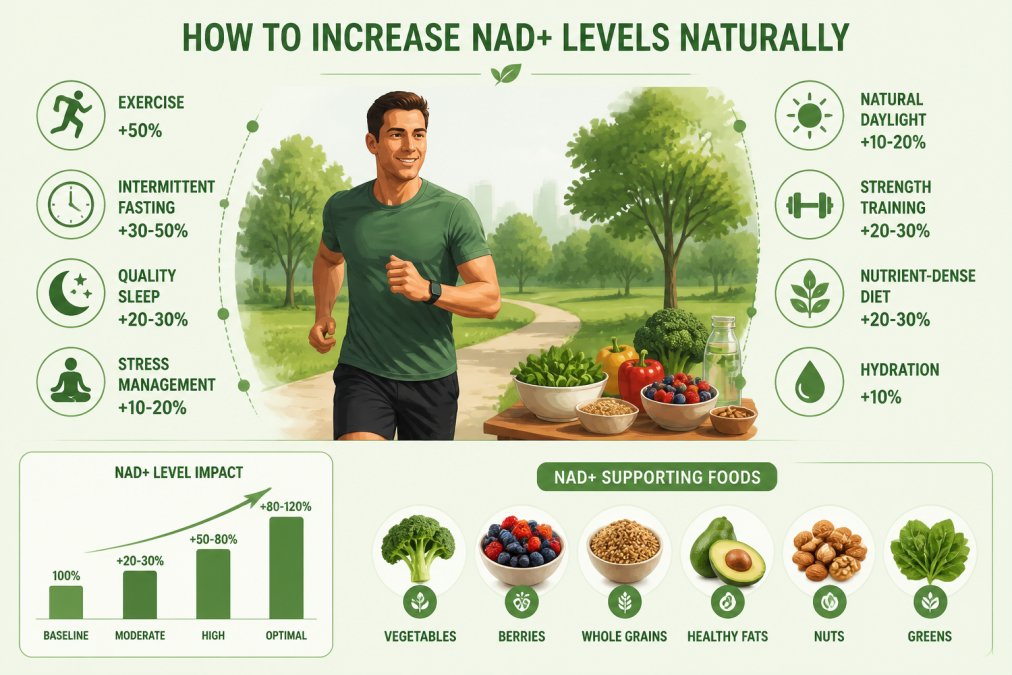
These lifestyle approaches work but slowly. Most people see meaningful improvements in 8-12 weeks of consistent effort. For people with severe NAD+ deficiency or those over 55, lifestyle changes alone often aren't enough to restore NAD+ to optimal levels.
NAD+ Supplements vs. IV Therapy: What Works Best
Natural approaches have limits. Once NAD+ depletion reaches a certain point, your body's synthesis capacity can't keep up with what you need to restore normal function. This is where supplementation becomes relevant.
NAD+ precursor supplements are the most accessible option. NMN (nicotinamide mononucleotide) and NR (nicotinamide riboside) are the most researched precursors. These compounds enter your cells and are converted into NAD+. Bioavailability varies significantly between products. A product with superior absorption technology will raise your NAD+ levels more effectively than a basic formulation, even if the raw ingredient amount is similar.
Rejuven8 Pharmaceuticals offers a science-backed NMN formula specifically designed with advanced delivery technology to optimize absorption. This addresses a common frustration: many products don't deliver the cellular NAD+ increases you'd expect from the advertised dosage.
IV NAD+ therapy delivers NAD+ directly into the bloodstream, bypassing the digestive system entirely. This ensures rapid, complete absorption. IV therapy typically produces faster results, people often report improved energy and mental clarity within hours. However, IV therapy requires regular clinic visits, costs significantly more, and effects tend to be temporary unless followed by ongoing supplementation or lifestyle changes.
For most people, oral supplementation combined with lifestyle changes is the practical choice. Oral supplements are convenient, sustainable, and when formulated with proper delivery technology, effective. IV therapy works best as an initial boost, followed by oral supplementation to maintain levels.
Testing and Diagnosis: Can You Measure NAD+ Deficiency
Direct NAD+ testing is available but not straightforward. NAD+ levels fluctuate throughout the day and vary between different cell types. Blood tests measure NAD+ in red blood cells, which doesn't necessarily reflect NAD+ levels in your brain, muscles, or other tissues where it matters most for your symptoms.
There's no universally agreed-upon "normal" range for NAD+ levels. Different labs use different measurement methods, producing different values. This diagnostic ambiguity is one reason why NAD+ deficiency is often diagnosed clinically, based on symptoms and response to treatment.
The most practical approach for most people is symptom-based diagnosis combined with a therapeutic trial. If you have persistent fatigue, brain fog, poor sleep, and reduced physical performance, and lifestyle changes haven't resolved them, NAD+ supplementation is a reasonable intervention to try. If your symptoms improve significantly after 4-6 weeks, NAD+ depletion was likely a contributing factor.
When to Seek Professional Help
Consult a healthcare provider if your fatigue or cognitive decline is severe, sudden in onset, or accompanied by other symptoms like fever, weight loss, or joint pain. These could indicate underlying conditions beyond NAD+ deficiency.
If you have a history of heart disease, uncontrolled diabetes, or other serious health conditions, discuss NAD+ supplementation with your doctor before starting. Persistent insomnia lasting more than a few weeks deserves professional evaluation to rule out sleep apnea, restless leg syndrome, or thyroid dysfunction.
If you're experiencing cognitive decline affecting your ability to work or function, get a baseline cognitive assessment and ruling out of dementia risk factors. A functional medicine or integrative medicine practitioner experienced in NAD+ optimization can help determine whether supplementation is appropriate, what dose might be effective, and how to monitor progress.
The signs of NAD+ deficiency in adults are increasingly common as people age, but they're not inevitable. The fatigue, brain fog, and reduced vitality you're experiencing may have a metabolic root that's addressable. Rejuven8 Pharmaceuticals' science-backed NMN formula is designed to restore NAD+ levels with advanced delivery technology that ensures your cells actually absorb what you're taking. By supporting NAD+ production and using clinically validated formulas, you can restore energy, sharpen mental focus, and reclaim the vitality that age-related NAD+ decline has stolen. Start with lifestyle foundations, exercise, sleep, stress management, and if those alone don't resolve your symptoms, consider NAD+ supplementation as a proven way to accelerate recovery and support long-term cellular health.
| Symptom Category | Common Signs | Timeline for Improvement |
|---|---|---|
| Energy & Fatigue | Afternoon energy crashes, persistent tiredness, muscle weakness | 3-6 weeks with NAD+ support |
| Cognitive Function | Brain fog, memory issues, slow decision-making | 2-4 weeks with consistent supplementation |
| Sleep Quality | Insomnia, unrefreshed sleep, circadian disruption | 2-3 weeks as NAD+ levels rise |
| Physical Performance | Reduced exercise capacity, longer recovery times | 4-8 weeks with exercise + NAD+ support |
Frequently Asked Questions
What are the most common physical symptoms of NAD+ deficiency?
The most recognizable signs include persistent fatigue that doesn't improve with rest, muscle weakness, and declining physical performance. Many adults also experience afternoon energy crashes, reduced endurance during exercise, and general sluggishness. These symptoms reflect NAD+'s critical role in ATP production and mitochondrial function. If you notice these signs worsening with age, NAD+ depletion may be a factor worth investigating with a healthcare provider.
How do you know if you have NAD+ deficiency versus other conditions?
NAD+ deficiency symptoms overlap with other conditions like thyroid dysfunction, sleep disorders, and depression, making self-diagnosis difficult. Symptom overlap includes brain fog, fatigue, and mood changes. The most reliable approach is blood testing through a healthcare provider, though standard clinical tests for NAD+ levels are not yet routine. Working with a doctor who understands cellular health can help rule out other causes and determine whether NAD+ supplementation or lifestyle changes are appropriate for your situation.
Does NAD+ really decrease with age, or is fatigue just a normal part of getting older?
NAD+ levels do decline significantly with age, research shows levels drop by roughly 50% between your 20s and 60s. This age-related decline directly impacts mitochondrial function, energy production, and DNA repair capacity. While some fatigue is normal with aging, the severity and speed of decline vary widely based on lifestyle, stress, and genetics. Understanding this biological reality helps explain why some people maintain vitality while others experience rapid decline, and why supporting NAD+ becomes increasingly important after 40.
Can dietary changes alone restore NAD+ levels, or do I need supplements?
Dietary sources of NAD+ precursors like niacin and tryptophan help, but they may not fully restore depleted levels in adults experiencing significant deficiency. Foods rich in these precursors include chicken, tuna, mushrooms, and green peas. However, bioavailability and the extent of age-related decline mean supplementation often provides more reliable support. The choice between dietary approaches and supplements depends on your current levels, symptoms, and goals, a healthcare provider can help determine what's most effective for your situation.